💡What You'll Learn
- How AI is changing human behavior
- Why instant results reduce patience
- The link between speed and shallow thinking
- How AI affects creativity and focus
- Why deep thinking still matters
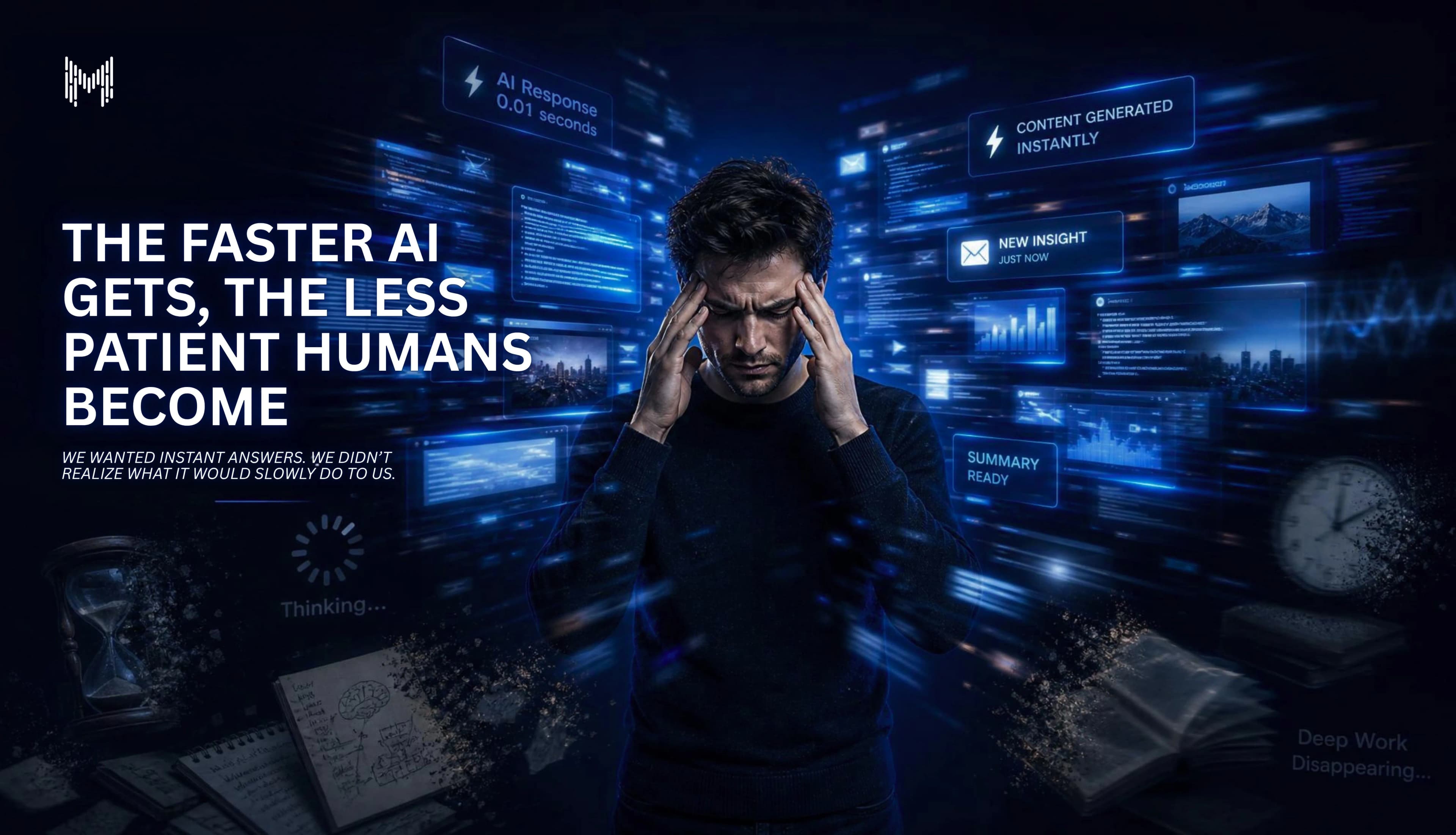
We wanted instant answers
We didn’t realize what it would slowly do to us.
A few years ago, waiting was normal.
You waited for:
- search results
- downloads
- replies
- designs
- edits
- ideas
Sometimes for hours.
Sometimes for days.
And honestly?
Nobody thought much about it.
Then AI Changed the Pace of Everything
Now?
You type a prompt…
And seconds later:
- the article is written
- the image is generated
- the code is completed
- the strategy is outlined
It feels magical.
Efficient.
Addictive.
And That’s the Part Nobody Talks About Enough
Because the faster AI gets…
The less patient humans become.
Quietly.
Gradually.
At scale.
We’re Being Rewired by Instant Results
Not physically.
Behaviorally.
Think About What’s Happening
The moment something takes effort now, people feel friction.
If a tool:
- loads slowly
- requires deep thinking
- takes time to learn
People abandon it faster than ever.
Why?
Because AI normalized immediacy.
We’re Getting Used to Life Without Delay
And delay used to serve a purpose.
It forced:
- reflection
- iteration
- deeper thinking
- patience
Now?
Most people move to the next prompt before they fully process the first answer.
AI Removed Waiting
But waiting was where a lot of thinking happened.
The Dangerous Shift Isn’t Technical
It’s psychological.
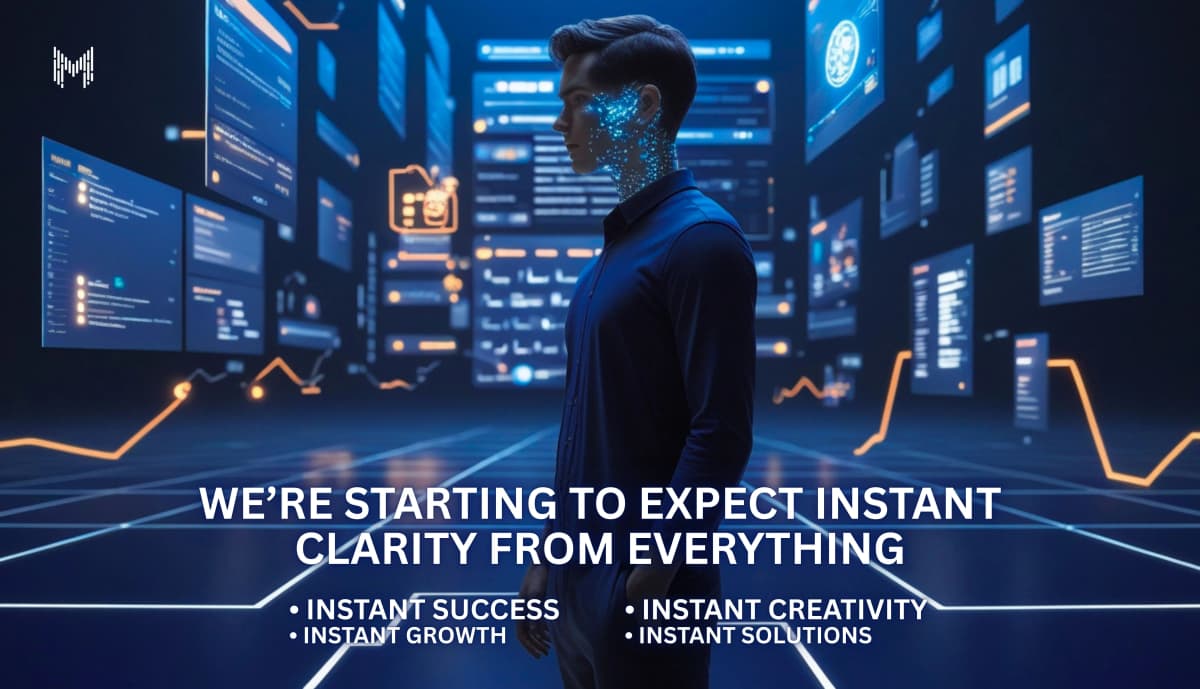
We’re Starting to Expect Instant Clarity From Everything
Not just technology.
Life too.
People want:
- instant success
- instant growth
- instant creativity
- instant solutions
And AI reinforces that expectation every single day
Because every time AI solves something instantly, the brain learns:
“Why tolerate slowness?”
But Some Things Are Supposed to Be Slow
Great ideas.
Real mastery.
Creative breakthroughs.
Deep understanding.
Those things usually take time.
AI Is Compressing the Space Where Patience Used to Exist
And that changes human behavior more than people realize.
Attention Spans Are Already Shrinking
You can see it everywhere.
People:
- skim instead of read
- prompt instead of explore
- react instead of reflect
Even Creativity Is Becoming Faster
Not deeper.
Faster.
And Fast Doesn’t Always Mean Better
That’s the trap.
Because AI Gives the Illusion of Completion
The work looks finished.
The answer sounds smart.
The output feels productive.
But Speed Can Hide Shallow Thinking
And shallow thinking scales dangerously well online.
Here’s the Irony
AI was supposed to free humans to think more deeply.
Instead, many people are thinking less patiently.
The Struggle Phase Is Disappearing
And struggle matters.
More than we like to admit.
Some of the Best Human Insights Come From:
- boredom
- frustration
- trial and error
- sitting with uncertainty
AI Is Reducing Our Tolerance for All of Them
Because now the brain expects:
immediate progress
The Moment Something Feels Hard…
People escape into automation.
That Changes Creativity
It changes learning.
It changes work.
And eventually…
It changes culture.
We’re Entering an Era of Cognitive Convenience
Where the default response becomes:
“Why think through it when AI can generate it?”
And That Question Is Bigger Than It Looks
Because convenience always reshapes behavior.
Social media did it.
Smartphones did it.
Algorithms did it.
AI is doing it now.
The Difference Is Speed
This shift is happening much faster.
We’re Already Seeing the Divide
Some people use AI to:
- accelerate learning
- sharpen ideas
- challenge assumptions
Others use it to:
- avoid effort
- bypass thinking
- skip the uncomfortable parts of growth
Same Technology. Different Outcomes.
The Real Risk Isn’t AI Becoming Smarter Than Humans
It’s humans becoming less comfortable with slowness.
Because patience isn’t just emotional
It’s intellectual.
Patience allows:
- exploration
- critical thinking
- originality
- depth
Without it…
Everything becomes reactionary.
And Reactionary Systems Produce Predictable Thinking
Which is exactly what AI already does well.
Why Choose Mkaits Technologies
At Mkaits Technologies, we build AI-powered solutions that enhance productivity without sacrificing human-centered thinking.
We focus on:
- intelligent AI integrations
- scalable automation systems
- user-focused AI experiences
- responsible technology development
Because the future isn’t just about moving faster.
It’s about thinking better while we do.
AI is making the world faster.
There’s no stopping that.
But speed changes people.
The faster answers become…
The harder it becomes to tolerate uncertainty, friction, and deep thought.
And maybe that’s the real challenge of the AI era:
Not whether machines can think like humans.
But whether humans will still have the patience to think deeply at all.