💡What You'll Learn
- Why startups still fail in 2026
- Why attention is the real bottleneck
- How validation beats development
- The importance of early distribution
- What successful founders do differently
The barrier to building has disappeared. The barrier to finding users hasn’t.
A few years ago, building a startup was hard.
Really hard.
If you had an idea, you needed:
- Developers
- Designers
- Infrastructure
- Funding
- Months of development
Before anyone could even use your product.
Today?
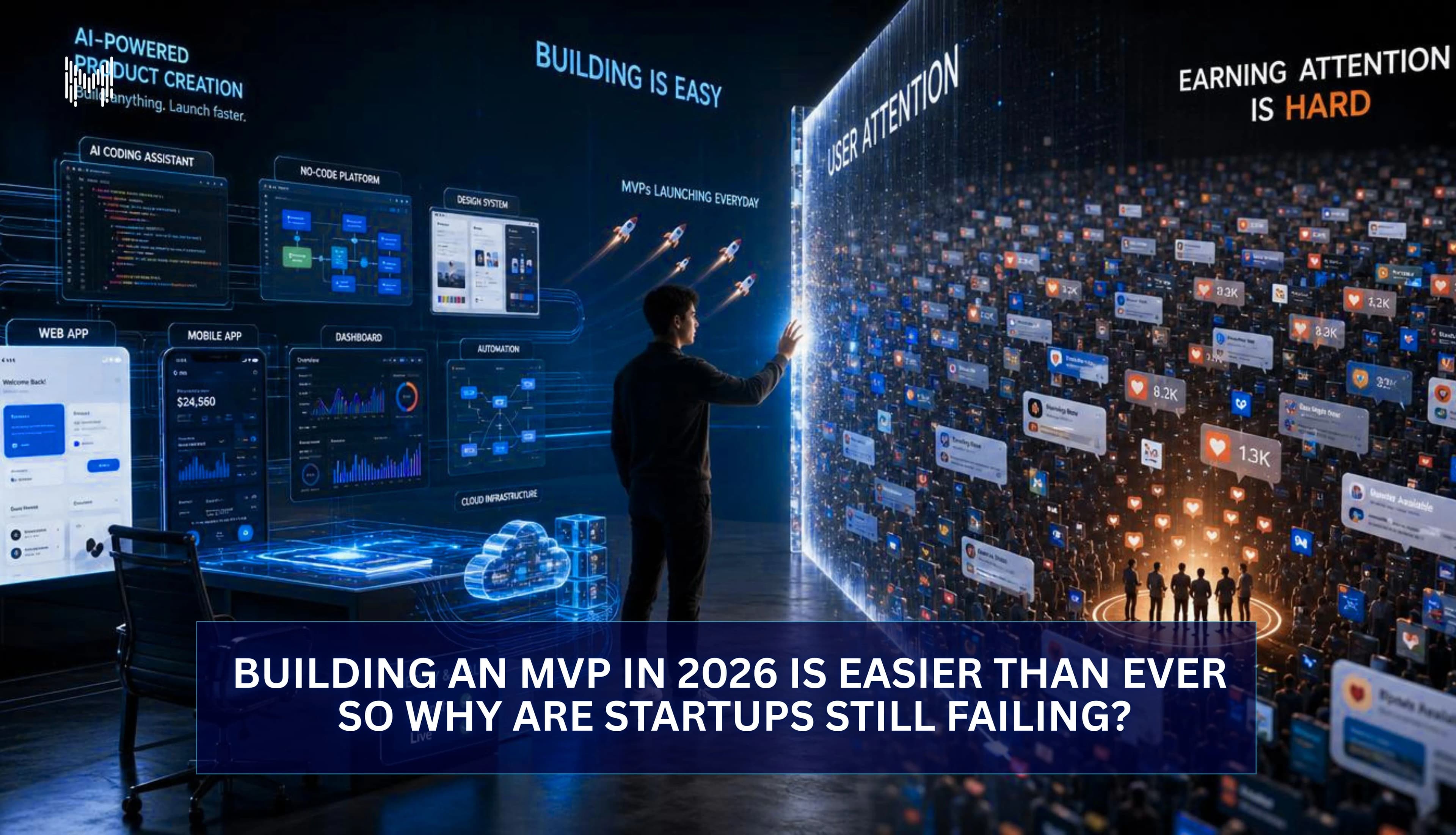
You can build an MVP over a weekend.
AI writes code.
No-code tools create interfaces.
Cloud platforms handle infrastructure.
Design systems are ready out of the box.
Launching a product has never been easier.
So why are startups still failing at roughly the same rate?
Because building was never the hardest part.
Finding users was.
And that problem hasn’t gone away.
The Startup World Solved the Wrong Problem
For years, founders believed their biggest obstacle was execution.
“If only we had more developers.”
“If only we had a bigger budget.”
“If only building was faster.”
Well, now it is.
And surprisingly, startup failure rates haven’t magically disappeared.
That’s because technology removed the friction of creation.
Not the friction of demand.
The MVP Is No Longer the Competitive Advantage
Let’s be honest.
Having an MVP used to mean something.
It showed commitment.
Skill.
Execution.
Now?
Thousands of products are launched every single day.
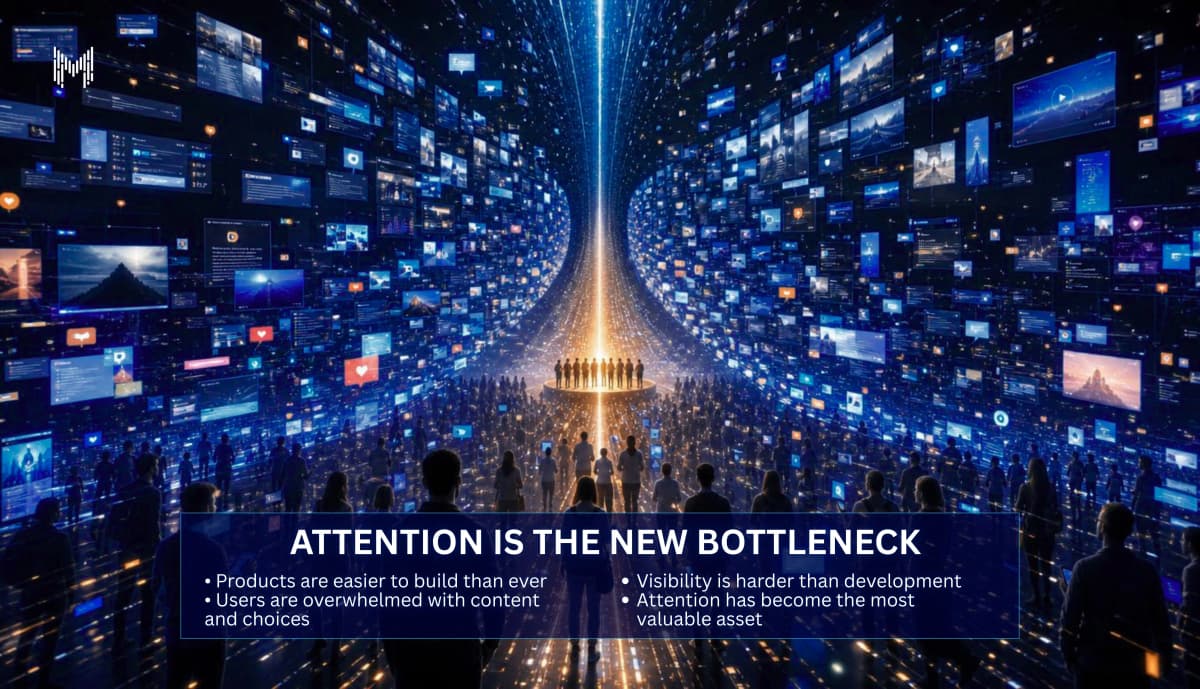
The internet isn’t suffering from a lack of products.
It’s suffering from a lack of attention.
Attention Is the New Bottleneck
Most founders wake up thinking:
“How do we build this?”
The better question is:
“Why would anyone care?”
Because users aren’t waiting for your product.
They aren’t refreshing Product Hunt hoping your startup launches.
They’re busy.
They’re distracted.
And they’re already using alternatives.
That’s the real challenge.
I Learned This the Hard Way
I once watched a startup spend months perfecting an MVP.
Every screen was polished.
Every feature worked.
Every bug was fixed.
The team was convinced people would love it.
Launch day arrived.
Nothing happened.
Not because the product was bad.
Because nobody knew it existed.
The founders had spent months building.
And almost no time understanding distribution.
Startups Don’t Die From Lack of Features
They die from lack of users.
This happens constantly.
A founder launches Version 1.
Nobody uses it.
Instead of talking to customers, they build Version 2.
Then Version 3.
Then Version 4.
Each release adds more features.
Each release attracts the same number of users:
Almost none.
At some point, the problem isn’t the product anymore.
It’s the market.
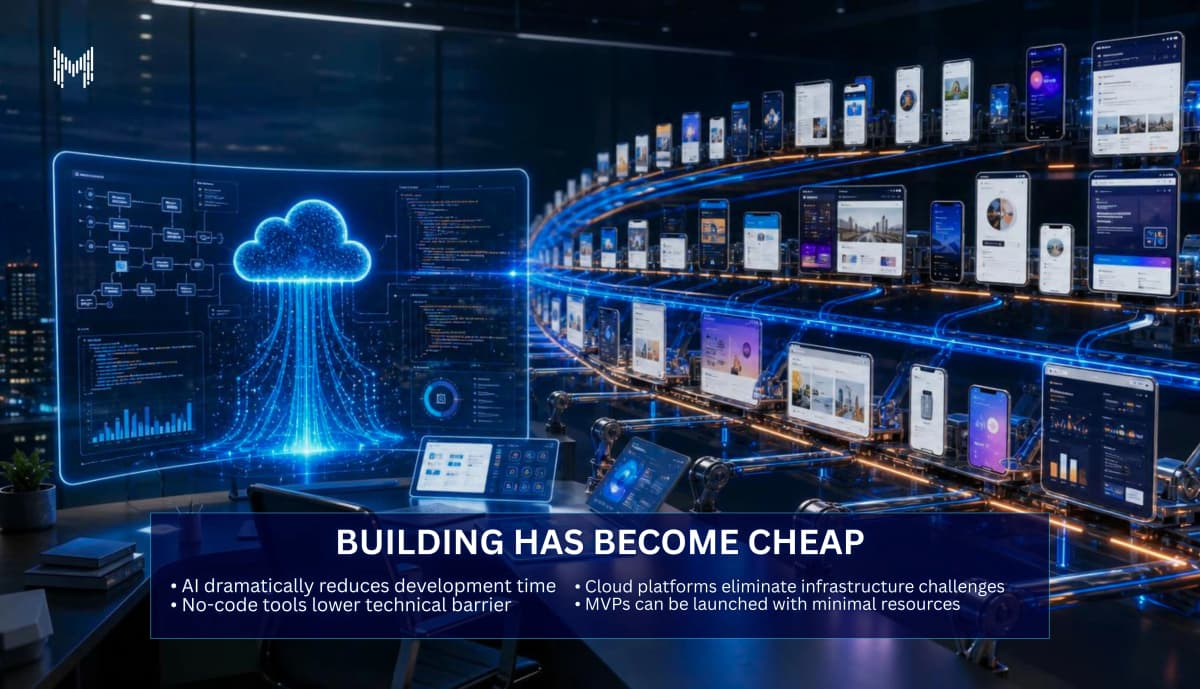
Building Has Become Cheap — Attention Has Become Expensive
This is one of the biggest shifts happening right now.
Technology dramatically reduced the cost of creation.
But attention became more competitive than ever.
Every startup is fighting against:
- TikTok
- YouTube
- Netflix
- Newsletters
- Existing products
You’re not competing for users.
You’re competing for attention.
And attention is limited.
AI Made Building Easier for Everyone — That’s Good and Bad
AI is an incredible force multiplier.
Founders can now:
- Generate code
- Create content
- Design interfaces
- Analyze data
- Build prototypes
Faster than ever before.
But here’s the catch:
Your competitors can too.
The tools became accessible to everyone.
Which means execution alone is no longer enough.
The New Advantage Is Understanding People
Technology is becoming commoditized.
Human understanding isn’t.
The startups winning today aren’t necessarily building more.
They’re understanding more.
They understand:
- Customer pain points
- User behavior
- Market timing
- Distribution channels
- Retention drivers
They solve real problems instead of chasing features.
Most MVPs Are Built Backwards
Founders often start with:
“Here’s what we want to build.”
Successful startups start with:
“Here’s a problem people desperately want solved.”
That difference changes everything.
Because users don’t buy products.
They buy outcomes.
Nobody Wants a Better Dashboard
They want more revenue.
Less stress.
Faster growth.
Lower costs.
Better experiences.
The product is simply the vehicle.
The Harsh Reality About Startup Failure
Most startups don’t fail because the technology doesn’t work.
They fail because:
- The problem wasn’t important enough
- The audience wasn’t clearly defined
- Distribution wasn’t considered
- Customer feedback came too late
- Growth assumptions were wrong
Those aren’t technical problems.
They’re business problems.
The Best Founders Build Less Than You Think
This sounds counterintuitive.
But successful founders often spend less time building and more time learning.
Learning:
- What users want
- What users hate
- What users ignore
- What users pay for
Because information reduces risk.
Features don’t.
In 2026, Validation Matters More Than Development
The old startup question was:
“Can we build this?”
Today, that’s usually easy.
The harder question is:
“Should we build this?”
Because building the wrong product faster doesn’t make it the right product.
The Winners Understand Distribution Early
The best startups don’t wait until launch day to think about marketing.
They build audiences.
Communities.
Partnerships.
Relationships.
Before the product is finished.
Sometimes before it’s even started.
Because distribution is often more valuable than development.
The Future Belongs to Founders Who Understand Both
Technology and people.
AI and psychology.
Products and distribution.
Building is becoming easier every year.
Understanding human behavior is not.
And that’s exactly why it remains such a powerful competitive advantage.
Why Choose Mkaits Technologies
At Mkaits Technologies, we help startups move beyond ideas and build MVPs designed for real-world validation, growth, and scalability.
Our expertise includes:
- MVP Development
- AI-Powered Applications
- Web3 Product Development
- Custom Software Solutions
- UI/UX Design
- Cloud Infrastructure
- Product Strategy Consulting
Because launching a product is only the first step.
Building something people actually want is what matters.
Building an MVP in 2026 is easier than it’s ever been.
You can launch faster.
Cheaper.
Smarter.
With fewer resources than any founder in history.
But none of that guarantees success.
Because startups don’t win when they launch.
They win when people care.
The barrier to building has disappeared.
The barrier to finding users hasn’t.
And that’s where the real work begins.