💡What You'll Learn
- Why trust matters more than UX
- How products earn user confidence
- What breaks trust in digital products
- Why transparency improves retention
- How to design for lasting loyalty
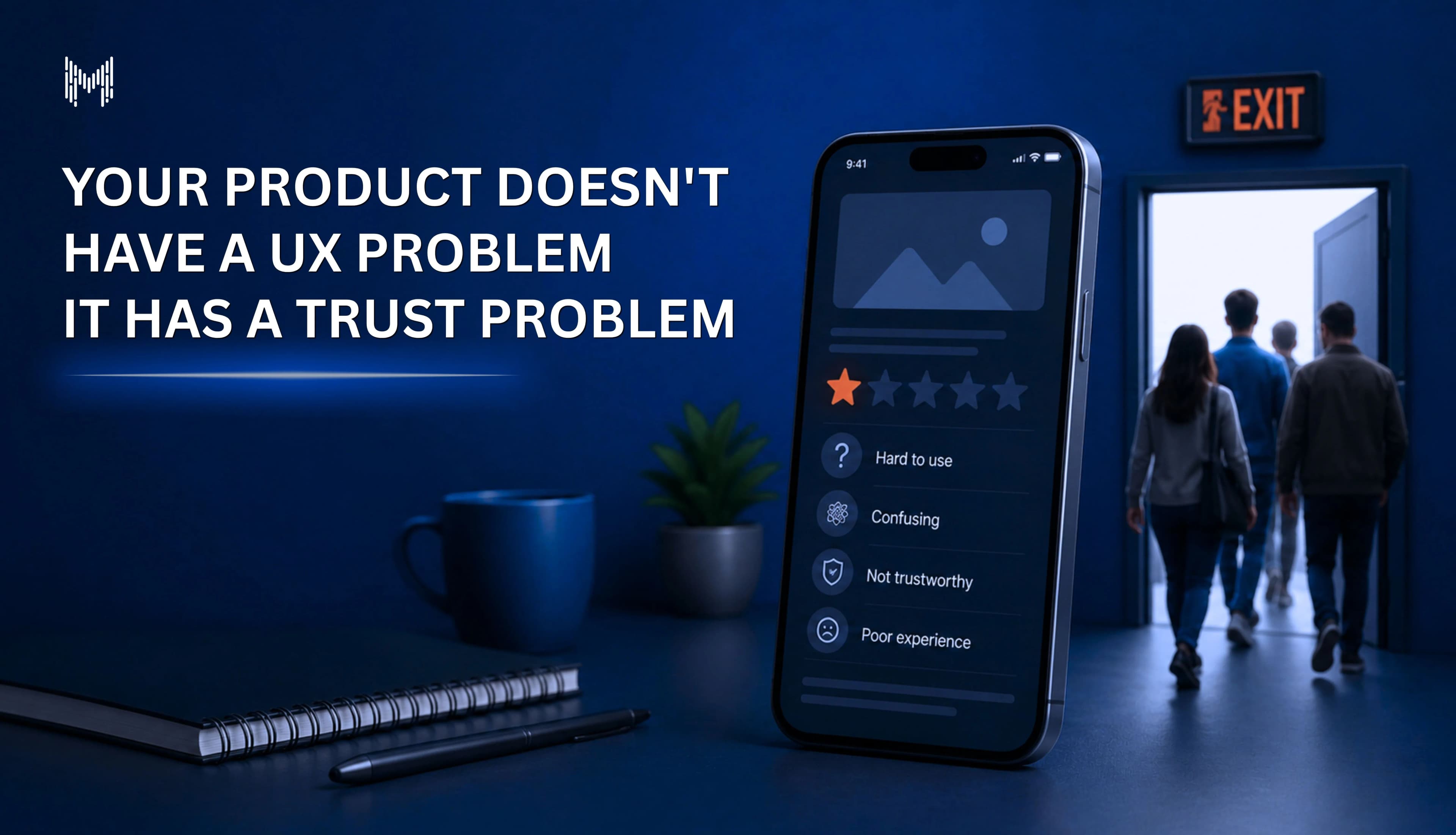
People don’t abandon products because they’re confusing. They abandon products because they stop feeling safe, confident, or in control.
I once downloaded an app that looked incredible.
Beautiful animations.
Modern interface.
Clean typography.
Five-star reviews.
Within five minutes, I deleted it.
Not because it was ugly.
Not because it crashed.
Because I didn’t trust it.
The app wanted access to my contacts.
Then my location.
Then notifications.
Then my camera.
Before it had done a single useful thing for me.
I remember staring at the screen thinking,
“You’ve done nothing to earn this.”
That moment has stayed with me.
Because it made me realize something most product teams rarely discuss.
People don’t leave products because of bad UX alone.
They leave because trust disappears.
And once trust is gone, no redesign can bring it back overnight.
We Think Users Leave Because They’re Confused
That’s the easy explanation.
“They couldn’t find the button.”
“The checkout flow is too long.”
“The onboarding has too many screens.”
Sometimes that’s true.
But often, the real reason sits underneath all of those problems.
The user doesn’t feel confident.
They don’t know what’s about to happen.
They aren’t sure what clicking that button will do.
They’re wondering:
“Am I about to lose money?”
“Will this company spam me?”
“Can I undo this?”
“Is my data safe?”
That’s not a usability problem.
That’s a trust problem.
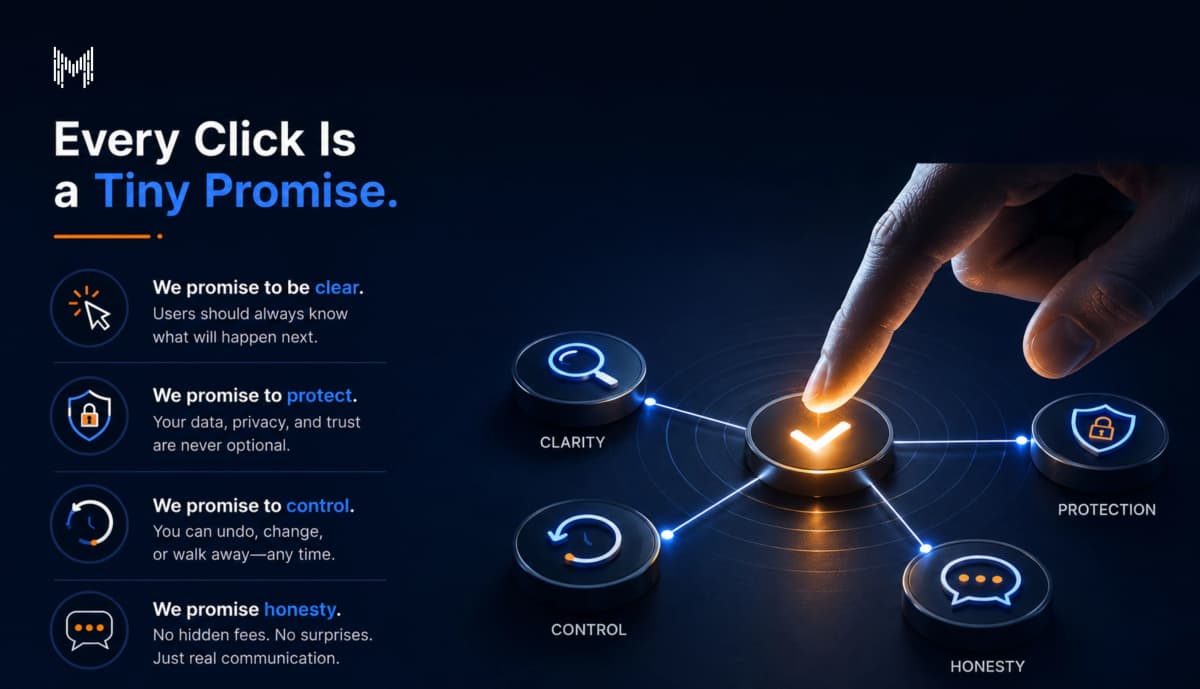
Every Click Is a Tiny Promise
Every interface makes promises.
Sometimes silently.
A “Buy Now” button promises a smooth purchase.
A sign up form promises your information will be handled responsibly.
A loading spinner promises something is actually happening.
A confirmation message promises your action worked.
Good products keep those promises.
Bad products break them.
Users remember broken promises much longer than beautiful interfaces.
Think About the Last Time You Closed a Website
Maybe it asked you to create an account before showing prices.
Maybe twenty pop ups appeared within ten seconds.
Maybe the “Close” button was impossible to find.
Maybe it looked suspicious.
None of those experiences are technically bugs.
Yet they all create the same feeling.
“I don’t trust this.”
And once that thought appears, people rarely stay long enough to discover how good your product actually is.
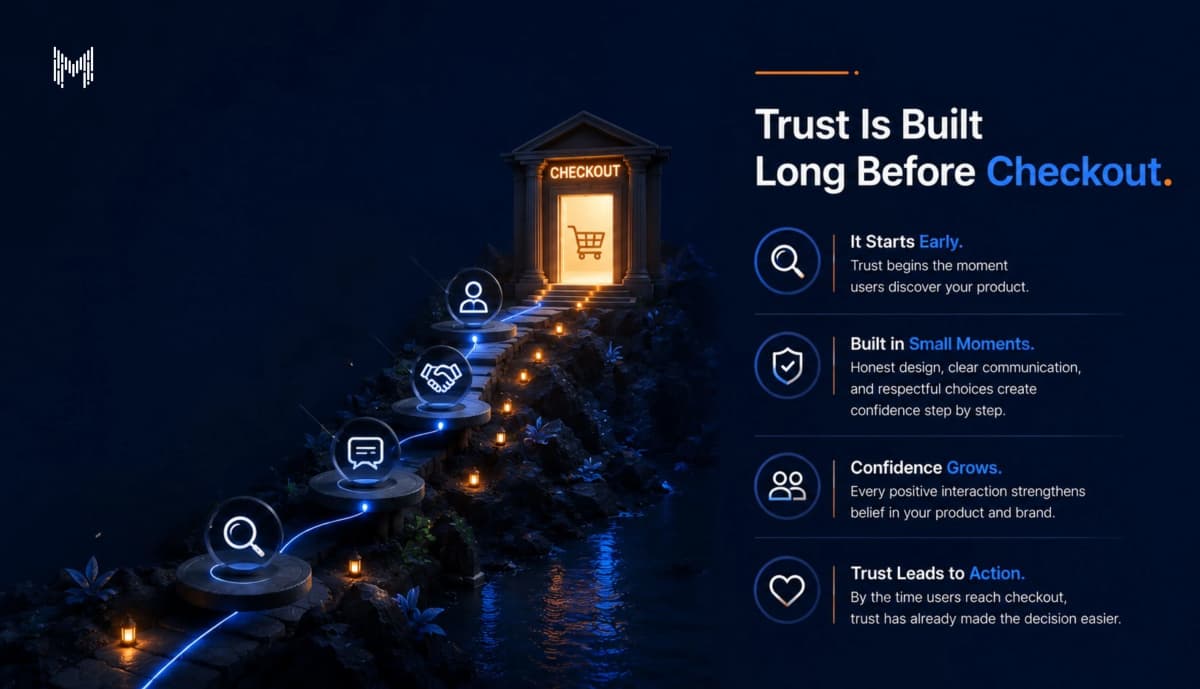
Trust Is Built Long Before Checkout
Many companies obsess over conversion rates.
But conversions don’t begin on the payment page.
They begin with tiny moments.
- Does the product explain what it’s doing?
- Does it ask permission instead of demanding access?
- Does it admit mistakes?
- Does it make reversing an action easy?
- Does pricing feel transparent?
- Does customer support actually exist?
These moments seem small.
Together, they create confidence.
The Dark Patterns Era Is Ending
For years, many digital products optimized for one thing:
More clicks.
More subscriptions.
More engagement.
Whatever it took.
Hidden unsubscribe buttons.
Confusing pricing.
Auto renewals nobody remembered agreeing to.
Countdown timers that reset every visit.
Those tactics sometimes increased short term numbers.
But they quietly destroyed something much harder to rebuild.
Trust.
And today’s users are better at recognizing manipulation than ever before.
Good UX Feels Effortless — Great UX Feels Honest
There’s a difference.
A beautiful interface can still manipulate people.
A simple interface can still hide important information.
Trust isn’t created through aesthetics.
It’s created through transparency.
Users should never have to wonder:
- What happens next?
- What am I agreeing to?
- Can I undo this?
- Who can see my data?
- Why does this app need this permission?
If those questions aren’t answered, uncertainty grows.
And uncertainty kills confidence.
The Fastest Way to Lose a Customer Is to Surprise Them
Unexpected charges.
Unexpected emails.
Unexpected permissions.
Unexpected limitations.
People don’t like surprises when money or personal information is involved.
Predictability creates comfort.
Comfort creates trust.
Trust creates loyalty.
Think About the Products You Love
Whether it’s a banking app, an online store, or a productivity tool, chances are you keep using it because you know what to expect.
It behaves consistently.
It respects your time.
It explains mistakes.
It doesn’t make you feel tricked.
That’s why trust often feels invisible.
You only notice it when it’s gone.
AI Is Raising the Stakes
As AI becomes part of more products, trust becomes even more important.
Users increasingly ask questions like:
“Did AI make this decision?”
“Can I appeal it?”
“Is my data being used to train a model?”
“Who is responsible if the AI gets it wrong?”
The future of UX isn’t just about intuitive interfaces.
It’s about making intelligent systems understandable.
Because people won’t trust technology they can’t explain.
The Companies That Win Will Be the Ones People Believe
Features can be copied.
Prices can be matched.
Technology evolves quickly.
Trust doesn’t.
It’s one of the few competitive advantages that compounds over time.
Every positive experience strengthens it.
Every broken promise weakens it.
That’s why companies with loyal customers rarely talk only about features.
They talk about relationships.
Designers Aren’t Just Designing Screens — They’re Designing Confidence
A confirmation message.
A progress bar.
A privacy notice written in plain language.
A simple refund policy.
A clear onboarding experience.
These aren’t just interface elements.
They’re signals.
They tell users,
“You’re in control.”
And that’s one of the most powerful feelings a product can create.
The Best Products Remove Doubt — Not Just Friction
We often hear designers talk about reducing clicks.
Reducing forms.
Reducing complexity.
Those things matter.
But removing doubt matters even more.
Because a user who trusts your product will forgive an extra step.
A user who doesn’t trust your product won’t complete even the simplest one.
Why Choose Mkaits Technologies
At Mkaits Technologies, we believe exceptional UX isn’t just about usability it’s about building trust. We create digital products that are intuitive, transparent, and designed around real human behavior, helping businesses earn confidence at every interaction.
Our expertise includes:
- UI/UX Design & Research
- User-Centered Product Design
- AI-Powered Digital Experiences
- Custom Web & Mobile Applications
- SaaS Product Development
- Enterprise Software Solutions
- Digital Product Strategy
Because the best user experience is one that users trust enough to return to.
The next breakthrough in UX won’t come from prettier interfaces.
It won’t come from faster animations.
Or another trendy design system.
It will come from products that make people feel respected.
Trusted.
Informed.
And in control.
Because users don’t build relationships with interfaces.
They build relationships with companies.
Every screen is simply another opportunity to strengthen or weaken that relationship.
So the next time someone says your product has a UX problem, ask a different question.
Do users understand the interface?
Or do they simply not trust what’s behind it?
The answer might change how you build your product forever.