💡What You'll Learn
- Why tokenization is gaining momentum
- How RWAs are changing investing
- Why digital ownership matters
- How tokenization improves accessibility
- Who stands to benefit the most
While everyone is watching crypto prices, the real revolution is happening somewhere else
A few years ago, mentioning blockchain at a business meeting usually triggered one of two reactions.
Someone would get excited and start talking about Bitcoin.
Or someone would roll their eyes and assume it was another speculative trend.
There was rarely any middle ground.
Today, something interesting is happening.
The loudest conversations are still about crypto prices, meme coins, and market cycles.
But behind the scenes, some of the world's largest financial institutions, technology companies, and investment firms are focused on something entirely different:
Tokenization.
And if they're right, we're witnessing the beginning of a transformation that could be far bigger than cryptocurrency itself.
Most People Think the Gold Rush Is Over
That's understandable.
Crypto has already had its moments.
The Bitcoin boom.
The NFT craze.
The DeFi explosion.
The endless headlines about market crashes and billion-dollar valuations.
For many people, blockchain feels like an old story.
But that's because they're looking in the wrong place.
The next wave isn't about creating digital assets out of thin air.
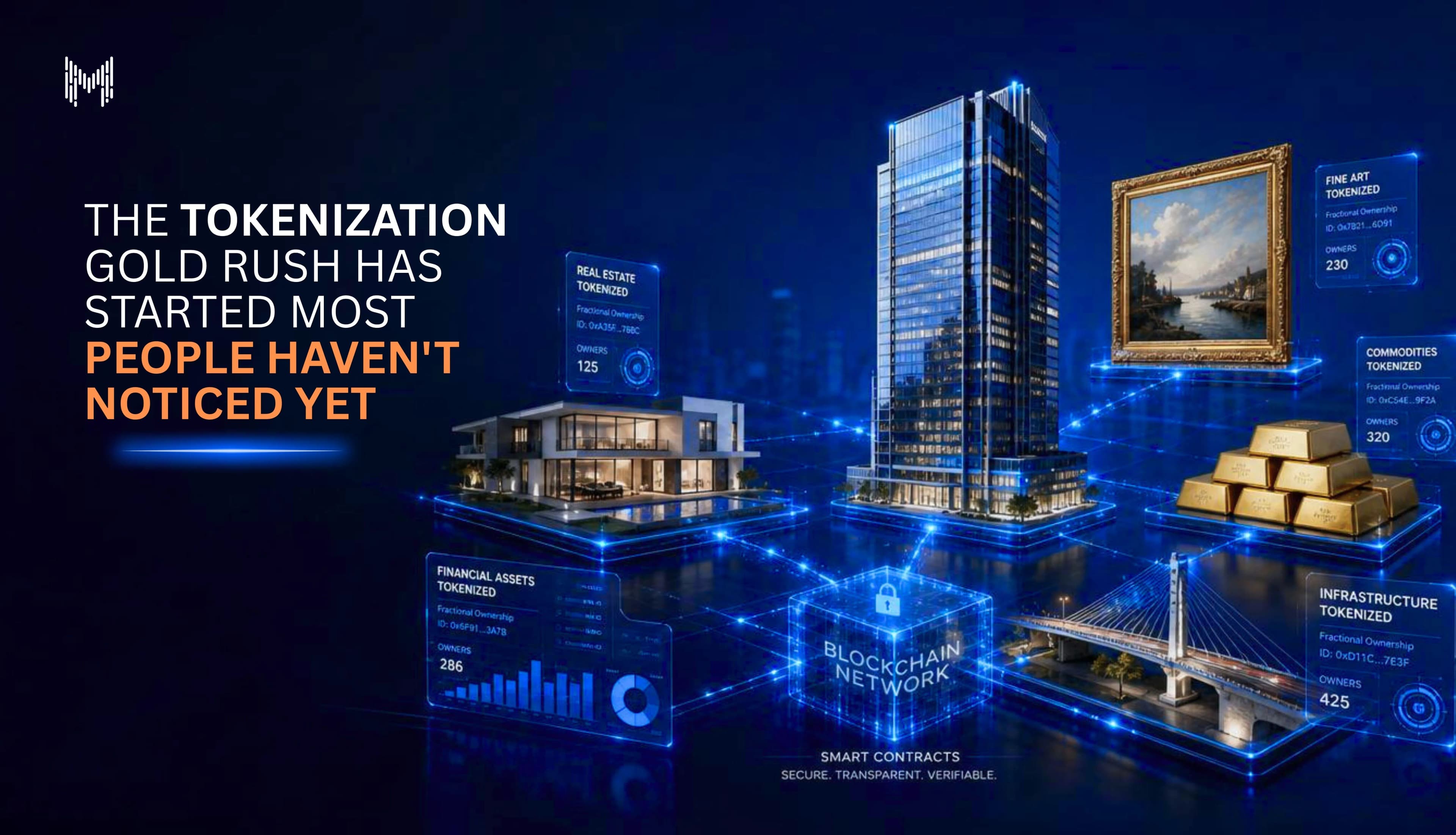
It's about bringing real-world assets onto blockchain networks.
And that's a very different conversation.
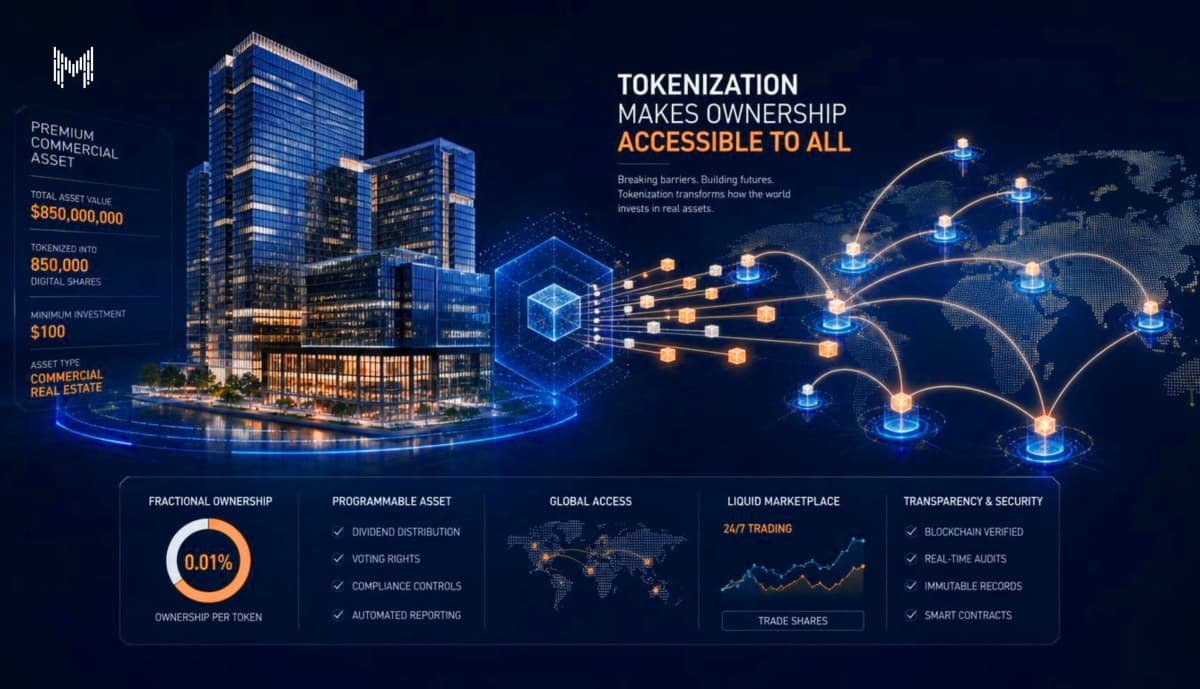
Imagine Owning a Piece of a Building
Not through a real estate investment trust.
Not through a complicated legal structure.
Not through a massive upfront investment.
Imagine opening an app and buying a fraction of a commercial property the same way you buy a stock.
That's tokenization.
Ownership represented digitally.
Transferable instantly.
Accessible globally.
Suddenly, Assets Become More Flexible
Historically, many valuable assets have been difficult to access.
Think about:
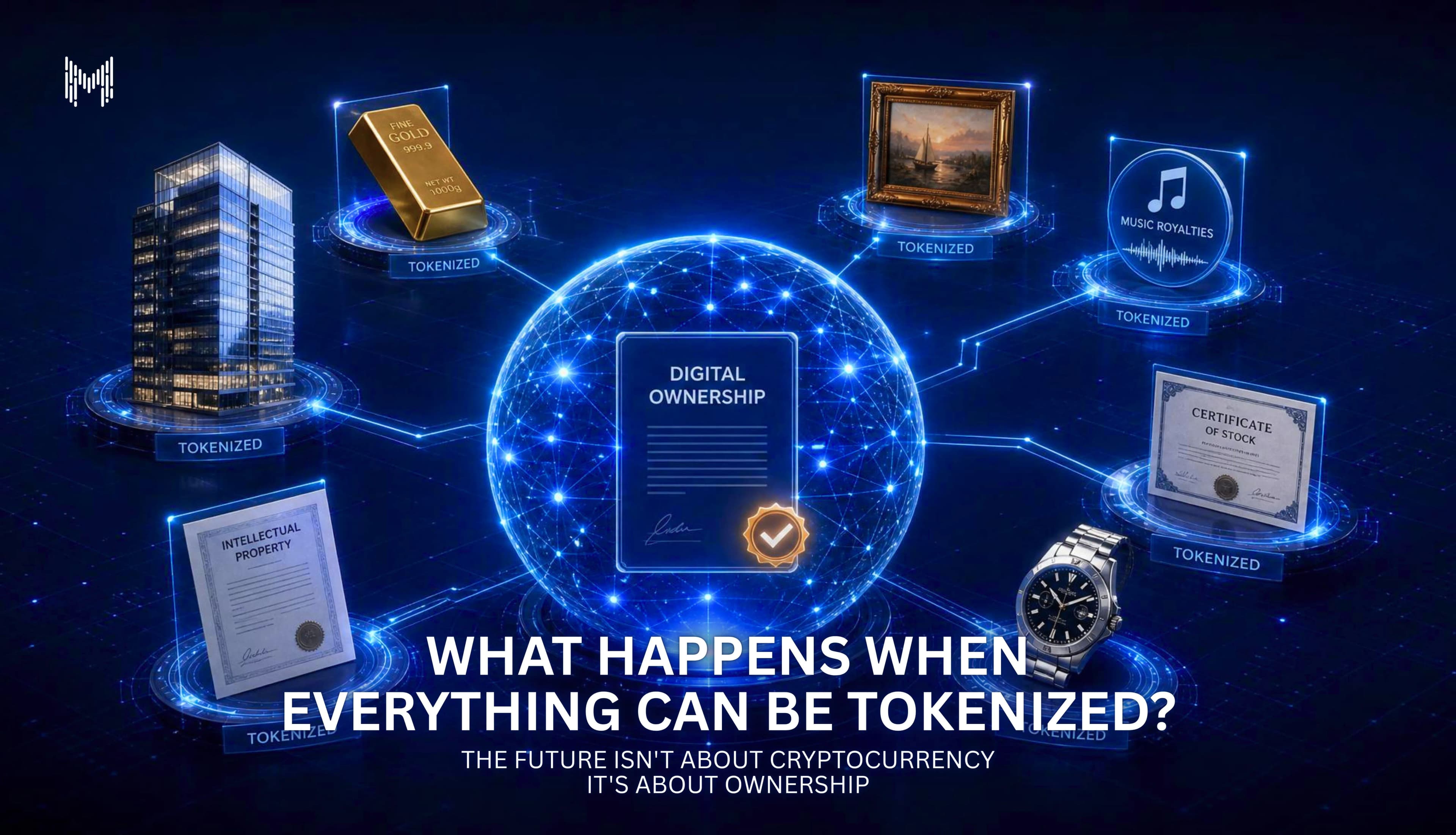
- Commercial real estate
- Private equity
- Fine art
- Infrastructure projects
- Luxury collectibles
- Intellectual property
Most people couldn't participate.
Not because they lacked interest.
Because the barriers were too high.
Tokenization changes that equation.
The Internet Changed Information — Tokenization Could Change Ownership
The internet made information easy to move.
Before the internet, information traveled slowly.
Then suddenly, it moved instantly.
Tokenization aims to do something similar for ownership.
Instead of ownership being locked inside paperwork, institutions, and geographic boundaries, it becomes programmable.
Transferable.
Fractional.
Digital.
That's Why Big Money Is Paying Attention
Here's something most people don't realize.
The institutions exploring tokenization aren't doing it because it's trendy.
They're doing it because traditional financial infrastructure is incredibly inefficient.
Think about how many intermediaries are involved in transferring ownership today:
- Lawyers
- Brokers
- Custodians
- Banks
- Clearing houses
Each step introduces:
- Cost
- Complexity
- Delays
Tokenization has the potential to simplify many of these processes.
And where efficiency improves, opportunity usually follows.
This Doesn't Feel Like Crypto — And That's Exactly Why It Matters
One reason tokenization is gaining traction is because it solves practical problems.
It's not asking people to change how they think about value.
It's making existing systems work better.
A building remains a building.
A bond remains a bond.
A stock remains a stock.
The difference is how ownership is managed.
The Most Valuable Assets Haven't Been Tokenized Yet
That's what makes this moment interesting.
We're still early.
Most real-world assets remain disconnected from blockchain infrastructure.
Most businesses haven't explored tokenization.
Most investors aren't paying attention.
And historically, major shifts often look small at the beginning.
Remember When E-Commerce Looked Like a Niche?
In the early days of online shopping, many people dismissed it.
Why buy online when stores already existed?
Today, that question sounds ridiculous.
The technology didn't replace commerce.
It transformed how commerce worked.
Tokenization could follow a similar path.
Not replacing ownership.
Improving how ownership moves.
Entire Industries Could Be Reshaped
Consider what happens when ownership becomes programmable.
Imagine:
- Real estate investments available globally
- Startup equity traded more efficiently
- Artists monetizing intellectual property directly
- Loyalty programs becoming transferable assets
- Carbon credits traded transparently
- Infrastructure projects funded by global communities
The possibilities extend far beyond finance.
They're about creating new economic models.
But Let's Be Honest — Not Everything Needs a Token
This is where many blockchain conversations lose credibility.
Just because something can be tokenized doesn't mean it should be.
Technology isn't valuable because it's new.
It's valuable because it solves problems.
The future isn't a world where every object becomes a blockchain asset.
The future is a world where tokenization is applied where it creates meaningful efficiency, accessibility, and liquidity.
The Real Opportunity Is Accessibility
For decades, many investment opportunities were available only to institutions and wealthy investors.
Tokenization challenges that model.
Fractional ownership lowers barriers.
Global accessibility expands participation.
Digital infrastructure reduces friction.
That combination is powerful.
Because financial innovation often follows one simple rule:
When access increases, markets grow.
The Gold Rush Has Already Started
The reason most people haven't noticed is because this gold rush doesn't look like previous ones.
There aren't long lines of speculators chasing the next trend.
There aren't viral social media moments every week.
Instead, something quieter is happening.
- Developers are building infrastructure.
- Financial institutions are running pilots.
- Governments are exploring frameworks.
- Businesses are experimenting with digital ownership models.
The foundations are being laid.
And foundations are rarely exciting while they're being built.
The Biggest Winners May Not Be Crypto Companies
That's another unpopular reality.
Some of the biggest beneficiaries of tokenization may be:
- Real estate firms
- Asset managers
- Financial institutions
- Supply chain companies
- Technology providers
The companies that successfully integrate tokenized ownership into existing business models could gain enormous advantages.
Not because they're blockchain companies.
Because they're solving real problems.

Why Choose Mkaits Technologies
At Mkaits Technologies, we help businesses explore the next generation of blockchain innovation through secure, scalable, and future-ready solutions.
Our expertise includes:
- Real-World Asset (RWA) Tokenization
- Smart Contract Development
- Web3 Platform Development
- Blockchain Consulting
- Token Economy Design
- NFT and Digital Asset Solutions
- DeFi Application Development
Because the future of blockchain isn't just about cryptocurrency.
It's about ownership.
Most people associate blockchain with speculation.
But speculation isn't what changes industries.
Infrastructure does.
And tokenization is infrastructure.
It's the infrastructure for digital ownership.
The infrastructure for programmable assets.
The infrastructure for more accessible markets.
Will everything become tokenized?
Probably not.
But enough things might.
And if that happens, future generations may look back at today's ownership systems the same way we look back at dial-up internet.
Functional.
But painfully inefficient.
The tokenization gold rush isn't coming.
It's already here.
Most people just haven't noticed yet.