💡What You'll Learn
- Why AI is evolving faster than people
- The gap between users and adapters
- Why mindset matters more than tools
- How AI changes valuable skills
- Why clarity is the new advantage
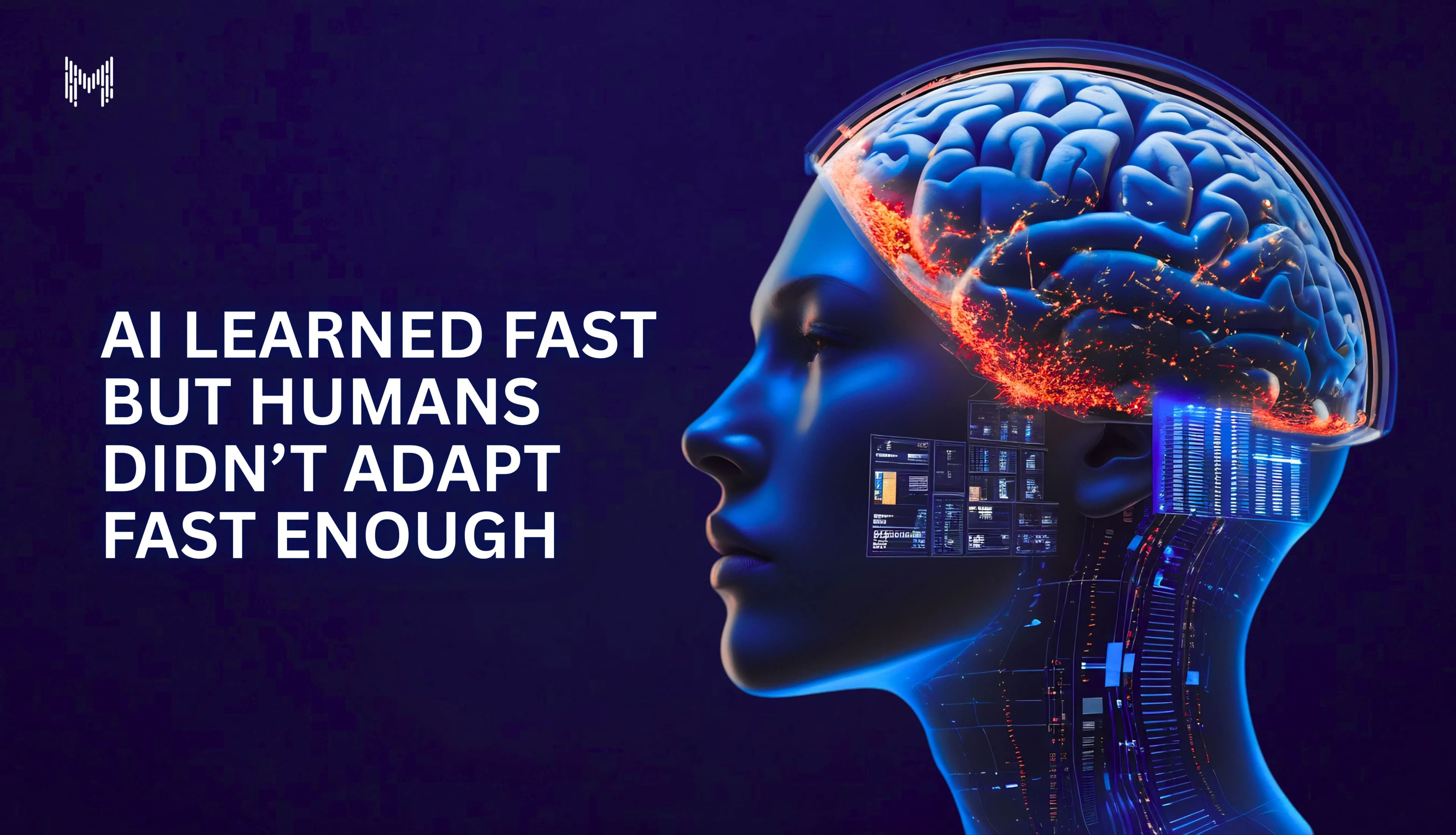
The technology didn’t outpace us. Our mindset did.
I remember the first time I used AI seriously.
Not just as a tool.
But as something that could actually do work.
I typed in a prompt.
Waited a few seconds.
And got back something… surprisingly good.
Not perfect.
But good enough to make me pause.
That Was the Moment Everything Shifted
At first, it felt like an upgrade.
Like moving from:
- slow searches → instant answers
- manual work → assisted work
It made things easier.
Faster.
More efficient.
And like most people, I thought:
“This is useful.”
I didn’t think:
“This is going to change how we work completely.”
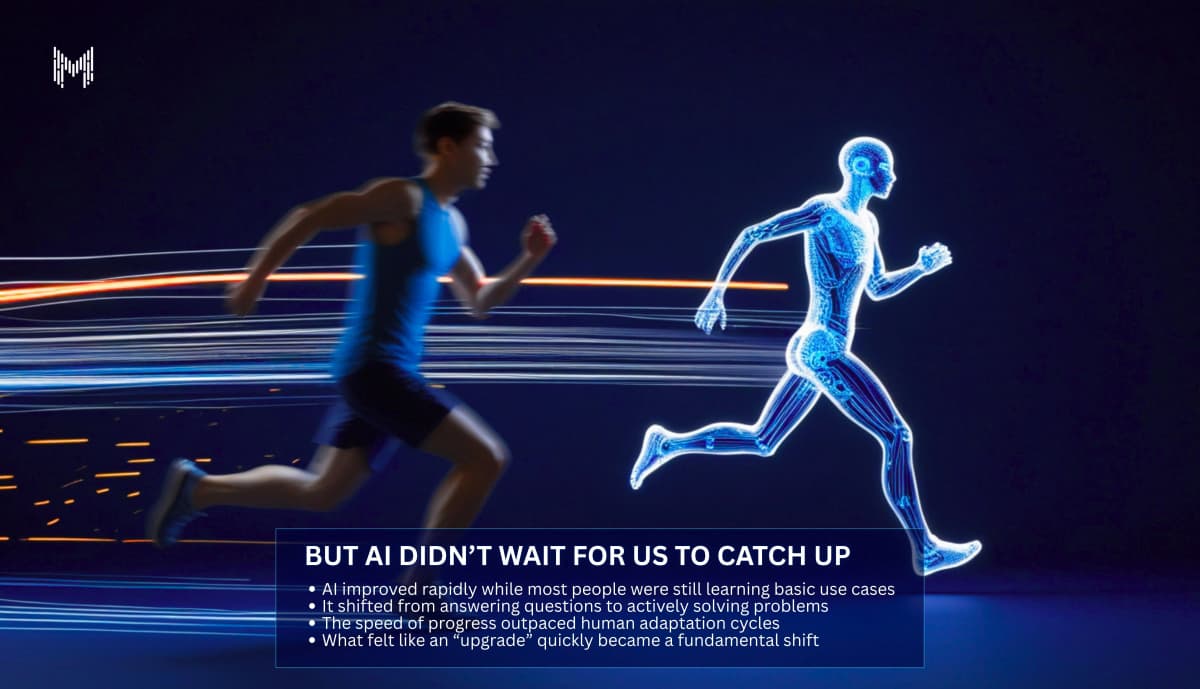
But AI Didn’t Wait for Us to Catch Up
While we were still figuring out how to use it…
AI kept improving.
Quietly.
Relentlessly.
It went from:
- answering questions → solving problems
- generating text → generating ideas
- assisting work → replacing parts of it
And the shift happened faster than most people expected.
The Gap Started Showing
Here’s where things got interesting.
AI evolved quickly.
But people?
Not as much.
Some adapted.
Most didn’t.
Two Types of People Emerged
1. The Ones Who Leaned In
They experimented.
They failed.
They learned how to ask better questions.
They didn’t just use AI.
They worked with it.
2. The Ones Who Stayed Where They Were
They hesitated.
They watched from a distance.
They said:
- “It’s not that reliable.”
- “It’s just a trend.”
- “I’ll figure it out later.”
And “later” kept moving further away.
The Real Problem Isn’t AI
It’s how we think about it.
Most people still treat AI like a search engine.
Something you ask…
And get an answer from.
But that’s outdated thinking.
AI Is Not a Tool Anymore
It’s becoming a thinking partner.
A system that:
- helps you explore ideas
- speeds up decision-making
- removes friction from execution
And if you’re still using it like it’s 2023…
You’re already behind.
The Shift Most People Haven’t Realized Yet
AI isn’t just changing what we do.
It’s changing how we do it.
And more importantly…
It’s changing what skills matter.
The Old Advantage Was Execution
If you could:
- design faster
- code better
- write more
- produce consistently
You had an edge.
The New Advantage Is Clarity
Now?
AI can help anyone execute.
So the real differentiator becomes:
- knowing what to build
- asking the right questions
- thinking clearly
- making better decisions
Because AI amplifies direction.
Not confusion.
If You’re Clear, You Win Faster
If you’re not?
You just create more noise… faster.
This Is Where Most People Get Stuck
They think using AI means:
“Give it a prompt and get results.”
But that’s surface-level.
The real shift is deeper.
It’s about:
- how you think
- how you structure problems
- how you guide outcomes
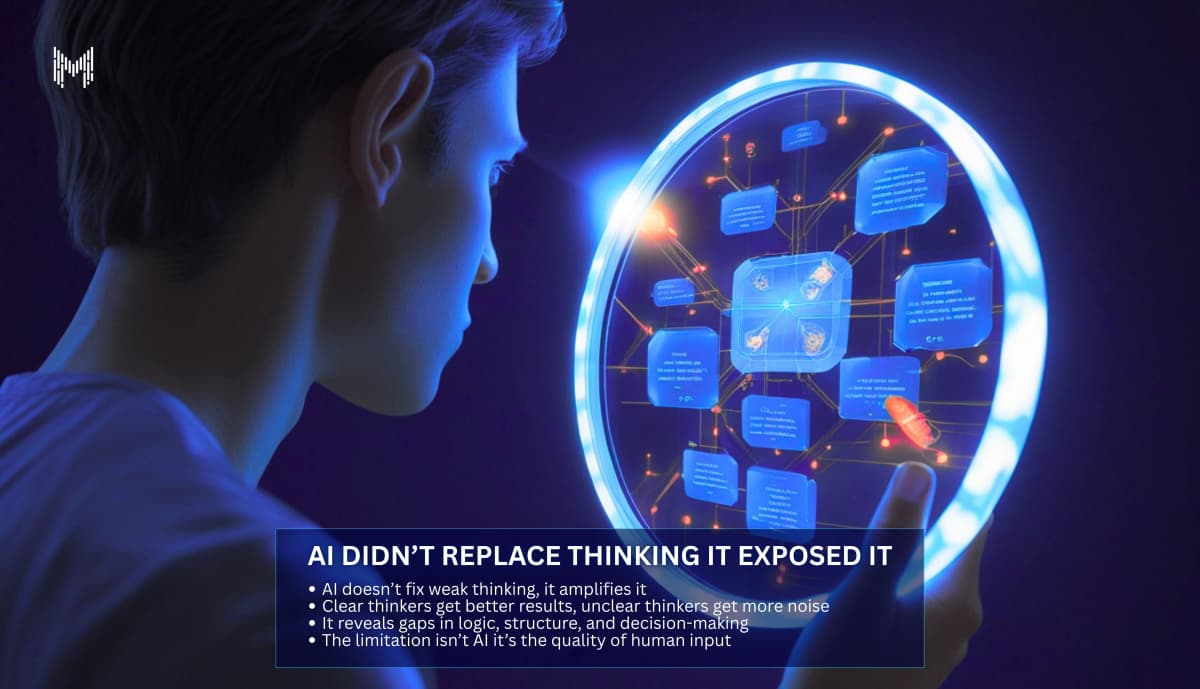
AI Didn’t Replace Thinking It Exposed It
If you’re unclear, it shows.
If your ideas are weak, it amplifies that too.
AI doesn’t fix bad thinking.
It scales whatever is already there.
And That’s Uncomfortable
Because it means the limitation isn’t the tool.
It’s us.
The Future Isn’t What You Think
Most people think AI will:
- replace jobs
- automate industries
- take over systems
And yes, some of that will happen.
But the bigger shift is simpler.
AI Will Separate People Faster Than Ever
Not by talent.
But by adaptation.
The gap between:
- people who understand how to use it
- and people who don’t
Is growing every day.
And It’s Not Slowing Down
AI is moving toward:
- more autonomy
- better reasoning
- deeper integration into daily work
Soon, it won’t just wait for prompts.
It will anticipate needs.
Suggest actions.
Make decisions.
The Real Question Isn’t “What Will AI Do?”
It’s:
“Will you evolve with it?”
Because This Isn’t the First Time
Technology has always moved faster than people.
But this time feels different.
Because AI isn’t just external.
It interacts with how we think.
How we create.
How we solve problems.
And That Changes Everything
You don’t need to become an AI expert.
But you do need to adapt.
You need to:
- experiment more
- think clearer
- stop waiting for certainty
- start using what’s already available
And That Changes Everything
You don’t need to become an AI expert.
But you do need to adapt.
You need to:
Because Waiting Is the Biggest Risk
Not AI.
Not automation.
Not change.
Waiting.
Why Choose Mkaits Technologies
At Mkaits Technologies, we believe AI isn’t just a tool it’s a shift in how products are built and how businesses grow.
We focus on:
- AI-powered product development
- intelligent system design
- scalable digital solutions
- user-first innovation
Because the future isn’t just about using AI.
It’s about using it the right way.