
💡What You'll Learn
- What crypto will really be used for in 2026
- Why most users won’t notice they’re using crypto
- Which real-world use cases will actually matter
- Why hype and speculation won’t drive adoption
- How UX will decide crypto’s future
- What builders should focus on now
(Not What Twitter Thinks)
If you spend enough time on crypto Twitter, you’d think the future of crypto in 2026 looks like this:
Everyone is trading meme coins from their phone.
Every brand launches a token.
NFTs are back and “bigger than ever.”
And somehow… everyone is still early.
It sounds exciting.
It also has very little to do with reality.
Because outside of crypto Twitter, real people don’t wake up thinking about tokenomics, decentralization, or which chain is faster this week.
They wake up thinking about:
- Sending money without losing fees
- Getting paid faster
- Owning what they buy
- Trusting systems that keep failing them
And that’s where crypto’s real future lives.
Not in hype cycles.
Not in influencer threads.
Not in price charts.
But in quiet, practical, almost boring use cases that actually solve problems.
The First Truth Most People in Crypto Don’t Like
By 2026, most people using crypto won’t even realize they’re using crypto.
They won’t care if it’s blockchain-based.
They won’t ask which network it runs on.
They won’t debate decentralization on Reddit.
They’ll care about one thing only:
“Did this make my life easier?”
And that’s uncomfortable for an industry built on ideology. But it’s also how every successful technology evolves.
Email didn’t win because people loved protocols.
Smartphones didn’t win because users cared about chips.
Cloud computing didn’t win because people understood servers.
Crypto won’t win because it’s crypto.
It’ll win when it disappears into usability.
What Crypto Will Actually Be Used For in 2026
Let’s strip away the noise and talk about real-world blockchain use cases that will actually matter.
1. Invisible Payments (Not a “Financial Revolution”)
Crypto won’t replace money by 2026.
But it will quietly move money better than banks.
Cross-border payments that:
- Settle instantly
- Avoid absurd fees
- Work 24/7
- Don’t break because of geography
No one will say, “I paid with crypto.”
They’ll say, “That was fast.”
That’s the real win.
The future of crypto payments isn’t disruption it’s removing friction people have hated for decades.
2. Digital Ownership That Actually Makes Sense
NFTs didn’t fail because ownership was useless.
They failed because the experience was terrible.
By 2026, crypto will power ownership of:
- Digital licenses
- In-game items
- Membership access
- Digital identities
- Content rights
And users won’t need to understand wallets, gas fees, or block explorers to use them.
Ownership will feel natural.
Simple.
Almost invisible.
That’s when blockchain technology finally becomes valuable to everyday users.
3. Programmable Trust Where Institutions Fail
This is the use case no one tweets about — but it’s massive.
Crypto will thrive where:
- Trust is broken
- Systems are slow
- Corruption is common
- Paperwork controls people
Smart contracts won’t be exciting.
They’ll be necessary.
Escrow without middlemen.
Agreements without delays.
Verification without waiting weeks.
Not flashy.
Extremely powerful.
This is blockchain solving real problems instead of inventing new ones.
4. Financial Access for People the System Ignores
Crypto won’t save everyone.
But it will matter deeply to people traditional finance ignores.
By 2026, blockchain will quietly power:
- Remittances
- Micro-payments
- Borderless work income
- Informal economies
No hype.
No speculation.
Just tools that work even when banks don’t.
That’s financial inclusion without the buzzwords.
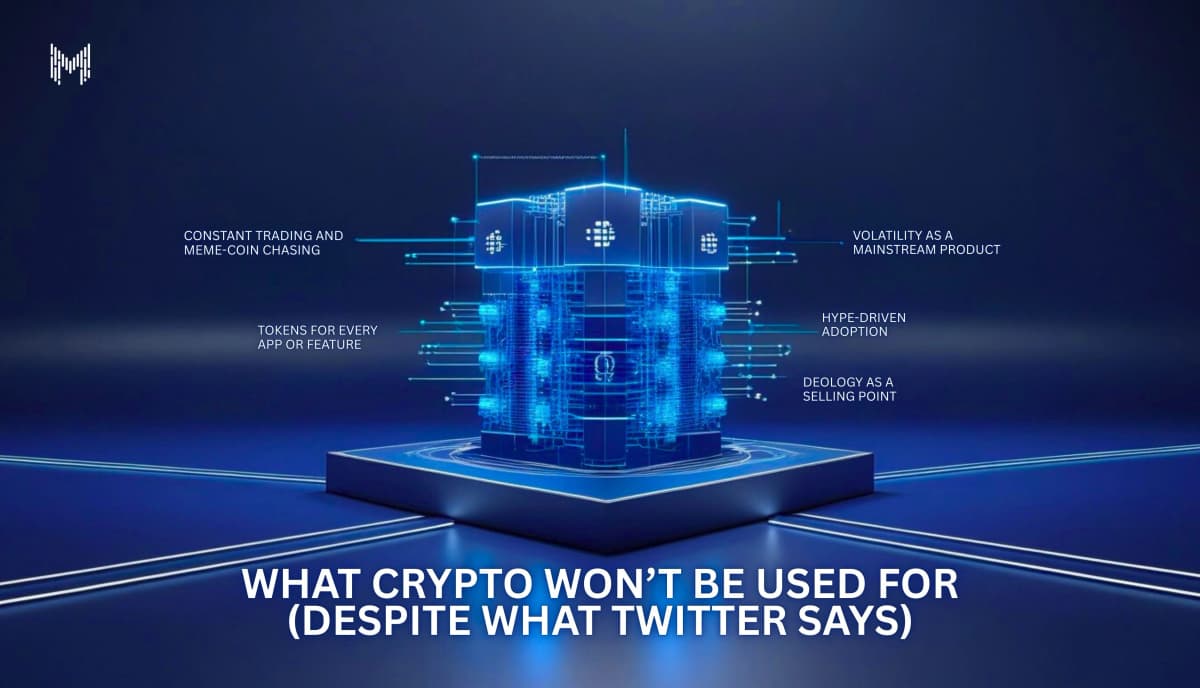
What Crypto Won’t Be Used For (Despite What Twitter Says)
Let's be honest.
- ❌ Everyone Trading All the Time
Most people don’t want volatility. They want predictability. - ❌ Tokens for Everything
Users don’t want 7 tokens just to use one app. - ❌ Constant Speculation
Speculation attracts attention, not long-term users. - ❌ Decentralization as a Selling Point
Users care about outcomes, not architecture.
Crypto doesn’t lose relevance when it becomes boring.
It becomes useful.
The Real Shift Happening Right Now
The biggest shift isn’t technical.
It’s philosophical.
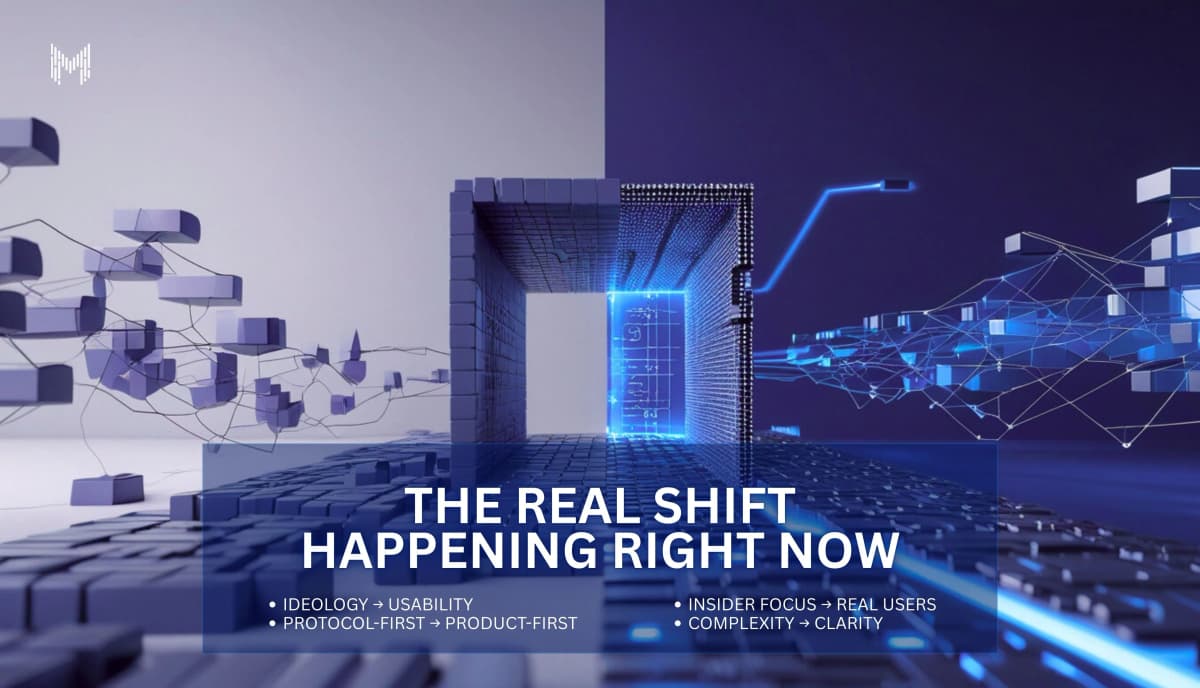
Crypto is moving from:
- Ideology → usability
- Protocol-first → product-first
- Builders → users
And this is where most crypto projects will fail.
Because they’re still building for:
- Other crypto people
- Investors
- Twitter engagement
Not for real humans trying to get things done.
Why UX Will Decide Crypto’s Survival
By 2026, features will be cheap.
AI, no-code, and automation will make building easy.
What will matter is:
- Clarity
- Speed
- Trust
- Emotional safety
People will choose the product that:
- Makes sense fastest
- Respects their time
- Doesn’t make the feel stupid
Bad UX will kill more crypto projects than regulation ever will.
Why We See This Clearly at Mkaits Technologies
At MKaits Technologies, we don’t build blockchain products to impress crypto insiders.
We build for users.
Our approach is simple:
- Start with real user behavior
- Reduce cognitive load
- Remove unnecessary complexity
- Design for understanding, not hype
Because growth doesn’t come from more features.
It comes from less confusion.
That’s how real adoption happens.
The Bottom Line
Crypto’s future isn’t loud.
It’s quiet.
Practical.
Useful.
By 2026, crypto will be used for:
- Faster payments
- Clear digital ownership
- Trust without friction
- Access without permission
And the biggest irony?
When crypto finally succeeds…
most people won’t even notice it’s there.