💡What You'll Learn
- Why users leave quietly without complaining
- How small friction points kill retention
- Why signups don’t equal real growth
- How to spot and fix silent churn
- Why retention matters more than acquisition
I remember the first time it happened.
We had just launched.
Not a huge launch. No big campaign.
But enough to feel something.
People were signing up.
A few messages came in “This looks great”
Someone even said, “This is exactly what I needed.”
That line stuck with me.
I thought…
we’ve got something.
Week One: Everything Feels Alive
The first few days are always exciting.
You keep refreshing the dashboard.
Watching numbers move like they actually mean something.
Signups going up.
Sessions looking healthy.
A few users coming back.
You start imagining what this could become.
You think about scale.
About features.
About what version 2 will look like.
You don’t think about what’s about to happen next.
Week Two: Something Feels… Off
It doesn’t hit you all at once.
It’s small.
You notice fewer returning users.
Sessions feel shorter.
The “active users” number isn’t growing the way it should.
But you ignore it.
Because technically… things are still “working.”
You tell yourself:
“It’s normal.”
“People are busy.”
“We just need more traffic.”
So you keep going.
Week Three: The Silence
This is where it gets uncomfortable.
Not because something breaks.
But because nothing happens.
No complaints.
No feedback.
No strong reactions.
Just… silence.
Users who signed up?
Gone.
Users who seemed interested?
Gone.
Users who said “this is great”?
Also gone.
And that’s when it hits you:
They didn’t quit.
They just didn’t come back.
The Part No One Prepares You For
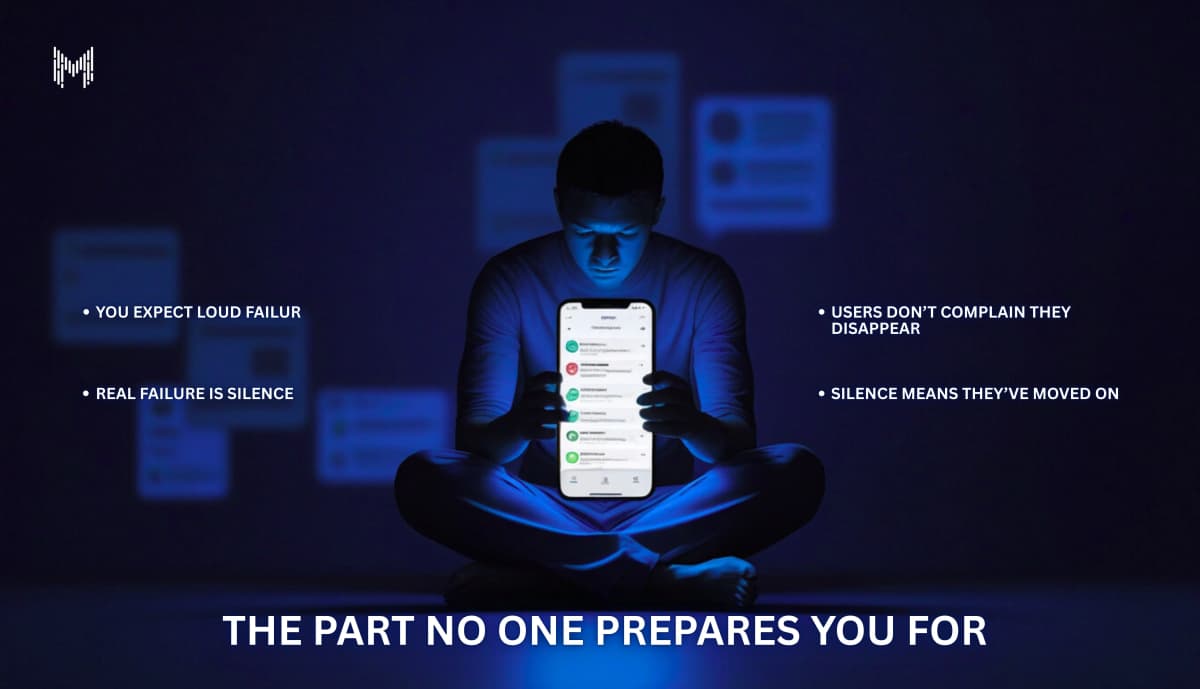
You expect failure to be loud.
You expect:
- Angry emails
- Bad reviews
- Clear rejection
But real product failure doesn’t look like that.
It looks like being ignored.
And honestly?
That hurts more.
Because at least complaints mean people care.
Silence means they’ve already moved on.
I Tried to Explain It Away
At first, I blamed everything else.
Maybe the market wasn’t ready.
Maybe we needed better marketing.
Maybe the product just needed more features.
So we did what most teams do.
We added more.
More features.
More options.
More “value.”
But nothing changed.
Because we were solving the wrong problem.
The Realization That Changed Everything
One day, I stopped looking at what users were doing.
And started looking at what they weren’t doing.
They weren’t coming back.
Not because the product was broken.
But because it wasn’t strong enough to pull them back.
And that’s a completely different problem.
Users Don’t Think the Way You Think
This was the hardest thing to accept.
We thought:
“They’ll explore.”
“They’ll understand over time.”
“They’ll come back when they need it.”
They didn’t.
Because users don’t build relationships with products.
They build habits.
And habits only form when:
- Value is immediate
- Effort is low
- Experience is clear
If any of those are missing…
There is no second visit.
The Tiny Moments That Kill Retention
It’s never one big issue.
It’s small things.
Things you barely notice as a builder:
- One extra step
- One confusing screen
- One unclear message
- One moment of hesitation
Individually, they seem harmless.
Together, they create friction.
And friction quietly pushes users away.
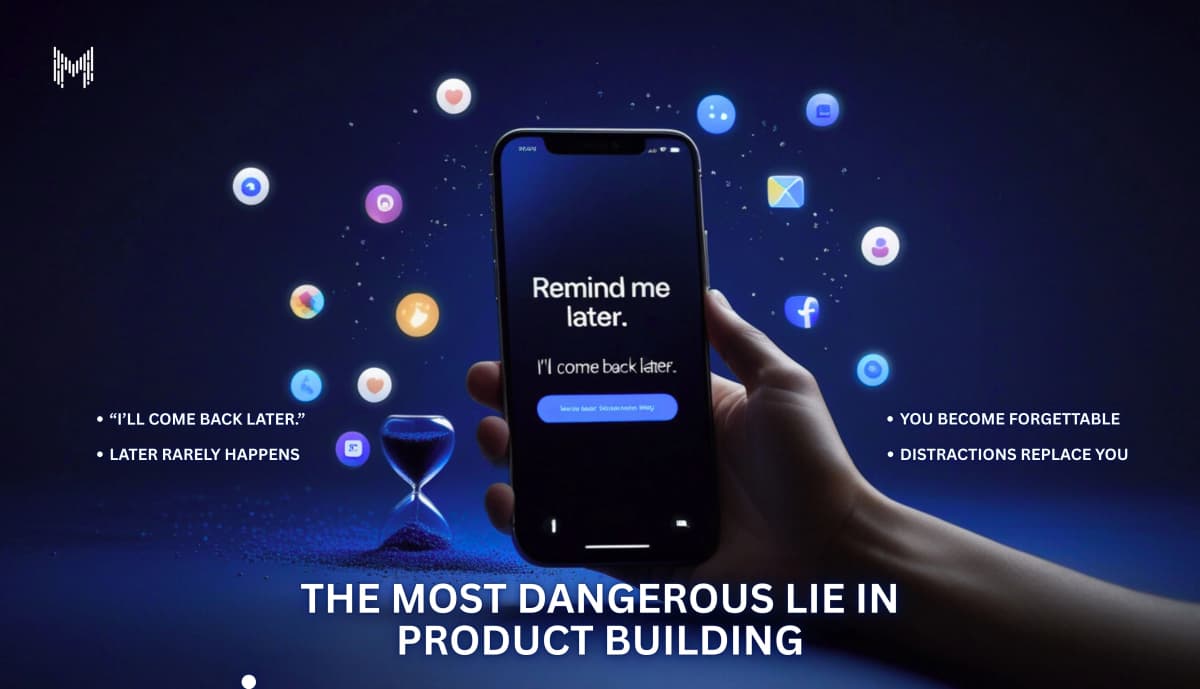
The Most Dangerous Lie in Product Building
“I’ll come back later.”
Users say this all the time.
But “later” almost never happens.
Because:
- New apps show up
- Attention shifts
- Memory fades
And your product?
It becomes something they tried once.
What I Wish I Understood Earlier
I used to think growth meant more users.
Now I know:
Growth means users coming back without being asked.
That’s it.
Not downloads.
Not signups.
Not clicks.
Return.
Because return means:
- They found value
- They trust the product
- They want it in their life
What We Changed After That
We stopped asking:
“How do we get more users?”
And started asking:
“Why aren’t they coming back?”
That changed everything.
We simplified flows.
Removed features.
Clarified messaging.
Focused on one core value.
Not ten things.
One thing.
Done well.
And slowly…
People started coming back.
The Difference You Can Feel (But Not Fake)
There’s a moment when a product starts working.
Not in metrics.
But in behavior.
Users don’t just try it.
They return.
Without reminders.
Without pressure.
Without effort.
That’s when you know:
You’re not being tested anymore.
You’re being used.
A Question Worth Asking
If your product disappeared tomorrow…
Would your users:
- Notice?
- Miss it?
- Look for an alternative?
Or would they just…
Move on?
Why This Matters More Than Ever
Today, users have options.
Too many.
They don’t need to commit to your product.
They can try, leave, and forget all in minutes.
So the real competition isn’t another product.
It’s indifference.
Why Choose Mkaits Technologies
At Mkaits Technologies, we’ve lived through this.
The quiet drop-offs.
The confusing metrics.
The “why aren’t they coming back?” phase.
That’s why we don’t just build products.
We build experiences people return to.
We focus on:
- Clarity over complexity
- Retention over vanity metrics
- Real behavior over assumptions
Because a product that people try is easy to build.
A product people come back to?
That takes understanding.