💡What You'll Learn
- Why cloud bills spiral out of control
- How architecture drives cloud costs
- Why over-engineering is expensive
- The danger of building for imaginary scale
- How cloud exposes bad decisions
- Why simpler systems scale better
Let me guess.
You opened your cloud bill.
You stared at the number.
You refreshed it once, just to be sure.
And then you thought:
“There’s no way this is right.”
So you blamed the cloud.
AWS is too expensive.
Azure pricing makes no sense.
GCP feels like a trap.
But here’s the uncomfortable truth most teams avoid:
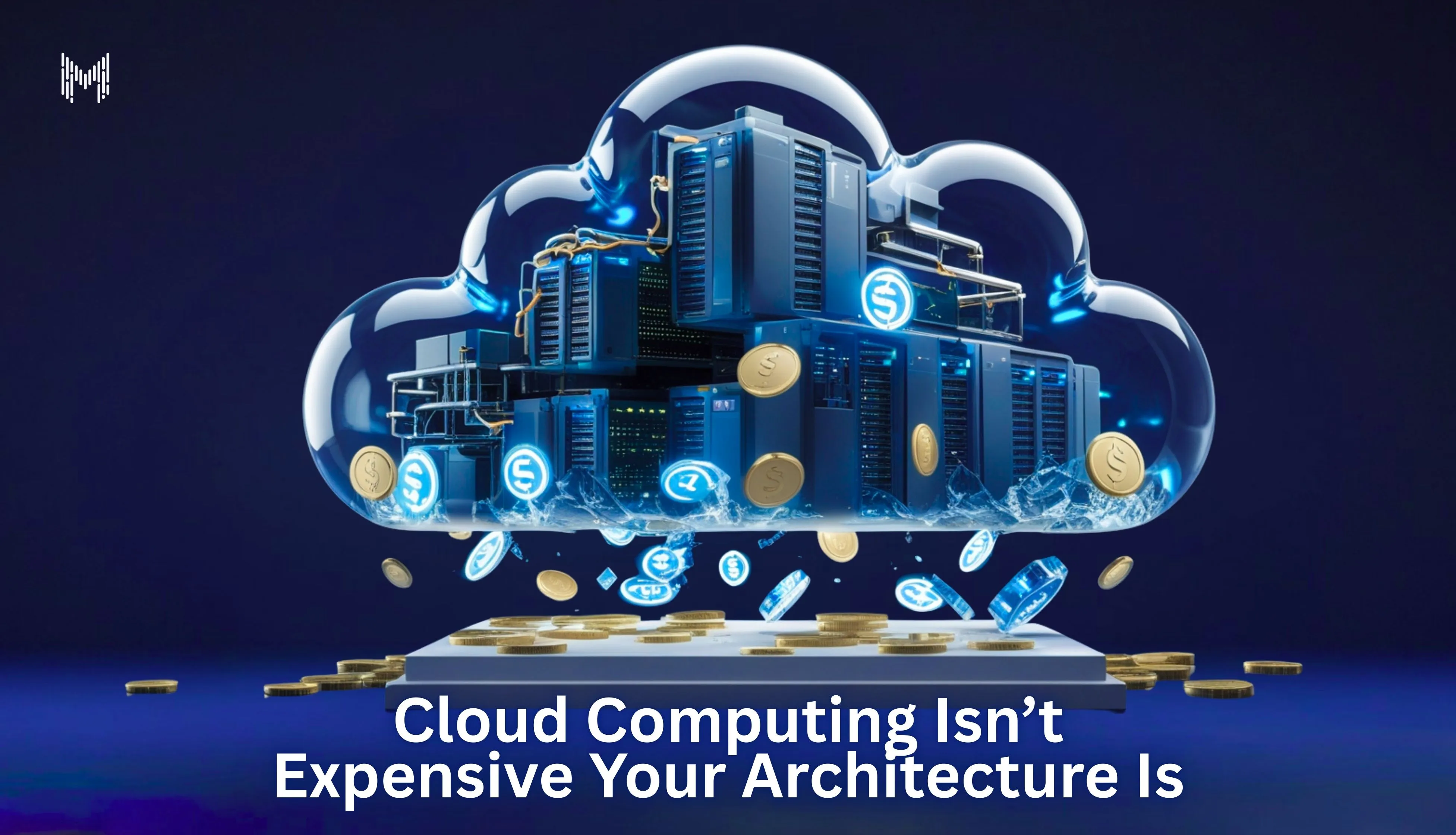
The cloud isn’t draining your money.
Your architecture is.
I’ve seen this play out across startups, scale-ups, and even “mature” companies. The pattern is always the same. The bill goes up, panic sets in, and suddenly the cloud is the villain.
It’s not.
The Lie We Tell Ourselves: “Cloud Costs Are Out of Control”
Cloud costs don’t explode randomly.
They grow quietly.
One service here.
One experiment there.
One environment no one shuts down.
One “temporary” setup that becomes permanent.
Until one day, finance asks a question no one wants to answer:
“Why are we paying for all of this?”
And instead of looking inward, teams look outward.
“Maybe on-prem would be cheaper.”
“Maybe we scaled too fast.”
“Maybe the cloud just isn’t worth it.”
Wrong target.
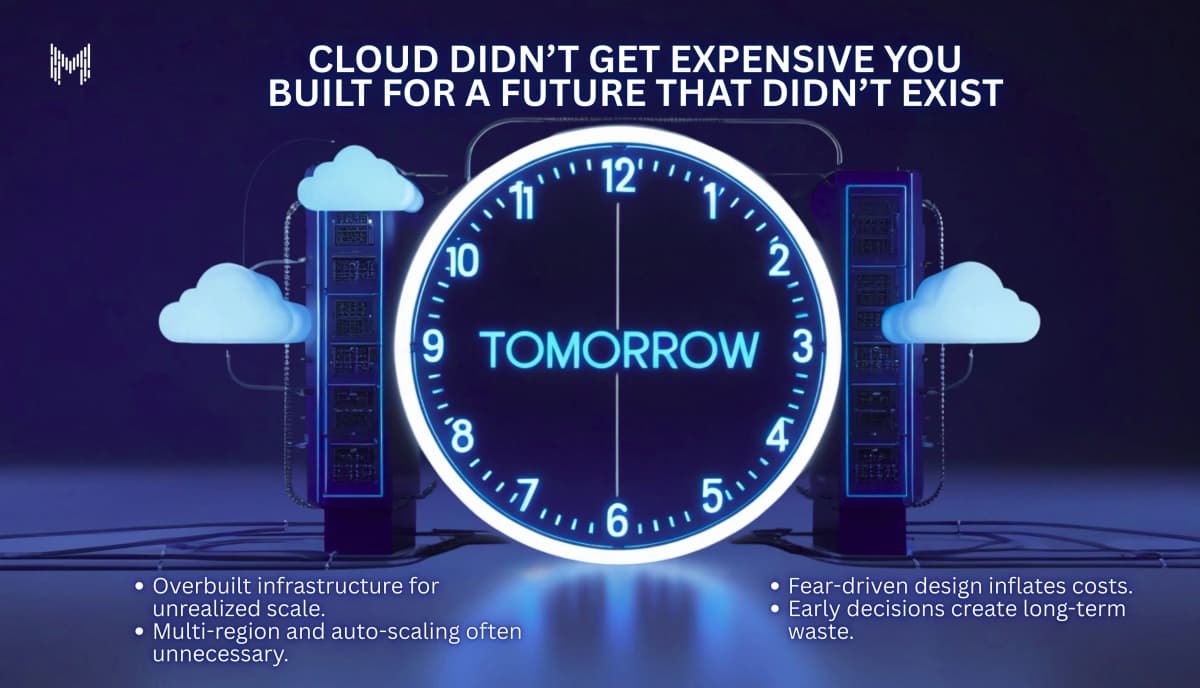
Cloud Didn’t Get Expensive You Built for a Future That Didn’t Exist
One of the most common mistakes I see?
Teams designing for scale they don’t have.
Multi-region setups with no global users.
Auto-scaling clusters serving a handful of requests.
Enterprise-grade redundancy for MVP traffic.
It feels responsible.
It feels impressive.
It feels safe.
It’s also expensive and unnecessary.
You didn’t build for scale.
You built for fear.
And fear shows up on your invoice every month.
Everything Is Running Because Nobody Wants to Turn Things Off
Here’s a question that makes teams uncomfortable:
Do you actually know what’s running in your cloud right now?
Not what should be running.
What is running.
Old staging environments.
Abandoned services.
Zombie databases from past experiments.
Cloud doesn’t charge you when you use things.
It charges you because they exist.
If something is alive in your account, it’s billing.
Silently. Relentlessly.
Most cloud waste isn’t technical.
It’s organizational.
No ownership means no accountability.
No accountability means nothing ever gets shut down.
Complex Architecture Feels Smart Until You Pay for It
Let’s talk about complexity.
Microservices everywhere.
Event-driven pipelines.
Over-engineered abstractions.
On paper? Beautiful.
In reality? Expensive to run and harder to maintain.
Complex systems don’t just cost more infrastructure.
They cost more attention.
More monitoring.
More debugging.
More coordination.
More things that can break at 2 a.m.
Engineering elegance doesn’t always translate to business sense
If your system is hard to explain, it’s probably hard to sustain.
“We’ll Optimize Later” Is How Bills Get Out of Hand
Every team says this.
“We’ll clean it up later.”
“We’ll optimize after launch.”
“We’ll fix costs once revenue comes in.”
Later never comes.
By the time you care:
- The system is bigger
- The risk is higher
- The dependencies are tangled
- Everyone’s afraid to touch it
So you keep paying.
Month after month.
For decisions you no longer remember making.
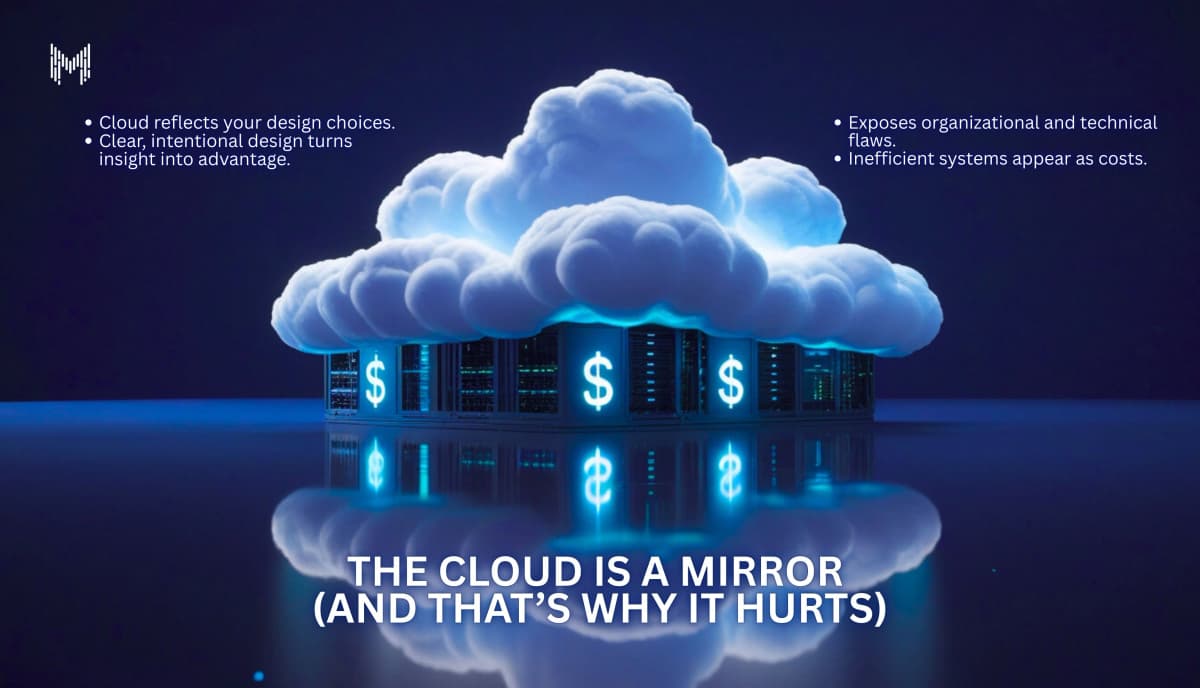
The Cloud Is a Mirror (And That’s Why It Hurts)
On-prem systems hide inefficiency.
The cloud exposes it.
Bad decisions don’t disappear.
They show up as line items.
And that’s actually a good thing.
Because the cloud doesn’t punish you for growing.
It punishes you for being careless.
The teams that thrive aren’t the ones spending less.
They’re the ones building with intention.
Why This Will Matter Even More in 2026
The next tech cycle won’t be forgiving.
AI workloads are heavy.
Users expect speed.
Margins are tighter.
Features are cheaper to build than ever.
The difference won’t be who builds faster.
It’ll be who builds cleaner.
Simple architectures will survive.
Bloated ones will bleed cash.
How We Think About Cloud at Mkaits Technologies
At Mkaits, we don’t start with services.
We start with questions.
What actually needs to scale?
What can stay simple?
What problem are we solving right now not someday?
What happens if usage doubles… or doesn’t?
We design cloud systems that grow with the product,
not ahead of it.
Because cloud efficiency isn’t about cutting costs.
It’s about removing confusion.
If your cloud bill feels painful, that’s not a pricing issue.
It’s feedback.
The cloud isn’t expensive.
It’s honest.
Fix the architecture.
The costs will follow.