💡What You'll Learn
- Why most hacks happen through human mistakes, not code
- How phishing and trust tricks start real breaches
- Why “we’re too small to target” is a dangerous myth
- How complexity increases your attack surface
- What security discipline should look like in 2026
Let’s clear one thing up first.
Hackers today aren’t sitting in dark rooms smashing keyboards and “breaking” systems like the movies show.
Most of the time, they don’t need to.
They walk straight in.
Because somewhere along the way, someone clicked something they shouldn’t have.
Used a password they reused everywhere.
Skipped an update.
Ignored a warning.
Or assumed, “We’re too small to be targeted.”
That assumption is exactly what gets companies burned.
Viruses Aren’t the Real Threat Anymore Humans Are
The word virus still makes people think of obvious damage:
- Files disappearing
- Screens glitching
- Systems crashing
But modern attacks are quieter. Much quieter.
Most malware today doesn’t want to destroy your system.
It wants to live inside it.
Steal quietly.
Observe silently.
Wait patiently.
And the scariest part? You usually don’t notice anything is wrong.
Your app works.
Your website loads.
Your team logs in every day.
Meanwhile:
- Data is being copied
- Credentials are being harvested
- Backdoors are being planted
The virus isn’t loud anymore.
It’s polite.
It blends in.
“We’re Not a Big Company” Is the Most Dangerous Lie
Small and mid-sized businesses love to say this.
“We’re not Google.”
“We don’t handle sensitive data.”
“Why would anyone target us?”
Here’s the truth no one likes hearing:
Hackers don’t care who you are.
They care how easy you are.
In fact, smaller companies are often better targets because:
- Security budgets are thin
- Processes are messy
- Access controls are loose
- Monitoring is minimal
You’re not invisible.
You’re exposed.
And automated attacks don’t discriminate.
Bots don’t check your company size.
They scan everything.
Most Breaches Don’t Start With Code They Start With Trust
Here’s what actually causes most security incidents:
- A phishing email that “looks real”
- A fake invoice
- A Slack message pretending to be IT
- A login page that’s almost correct
No zero-day exploit needed.
No genius hacker required.
Just one moment of distraction.
Security failures are rarely technical failures.
They’re human failures.
That’s why training matters more than tools.
And awareness matters more than firewalls.
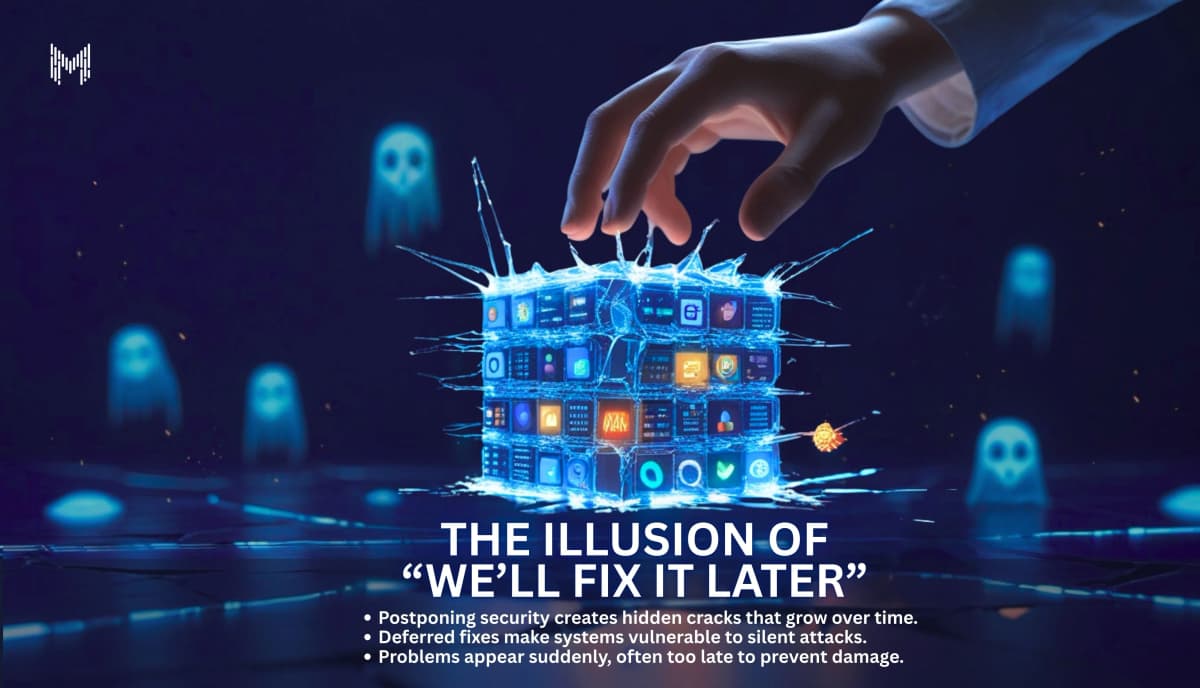
The Illusion of “We’ll Fix It Later”
Security is always postponed.
Not because teams don’t care.
But because:
- Features feel urgent
- Deadlines feel real
- Security feels abstract
Until it isn’t.
The problem is that security debt doesn’t show up like bugs.
It shows up like disasters.
By the time you “fix it later,” the damage is already done:
- Customer trust is gone
- Data is leaked
- Legal trouble starts
- Reputation takes a hit that never fully heals
Security isn’t something you add after launch.
It’s something you design for from day one.
Hackers Love Complexity Simplicity Is Defensive
Overcomplicated systems are a gift to attackers.
More tools.
More integrations.
More permissions.
More moving parts.
Every extra component is:
- Another attack surface
- Another misconfiguration
- Another thing no one fully understands
Clean architecture isn’t just good engineering.
It’s good security.
Simple systems are easier to audit.
Easier to monitor.
Easier to protect.
Complexity hides mistakes.
And hackers live in hidden places.

Security Isn’t About Paranoia It’s About Discipline
Good security doesn’t mean being scared of everything.
It means being intentional about basics:
- Strong authentication
- Clear access roles
- Regular updates
- Secure defaults
- Monitoring that actually gets checked
None of this is exciting.
None of this is “innovative.”
But almost every major breach traces back to boring basics ignored.
Hackers don’t beat cutting-edge systems.
They exploit forgotten ones.
The Silent Cost of a Breach
Even when companies survive an attack, something breaks permanently.
Teams stop trusting systems.
Founders lose sleep.
Customers hesitate.
Growth slows.
Security incidents don’t just cost money.
They cost momentum.
And momentum is much harder to recover than revenue.
What Security Really Means in 2026
Security today isn’t about building taller walls.
It’s about reducing assumptions.
Assuming users won’t make mistakes.
Assuming systems won’t be misused.
Assuming nobody is watching.
Someone always is.
The safest products are built by teams who assume:
- Someone will click the wrong thing
- Someone will reuse passwords
- Someone will make a mistake
And they design for that reality.
Why We Take Security Seriously at Mkaits Technologies
At Mkaits Technologies, we don’t treat security as a checkbox.
We treat it as part of user experience, architecture, and trust.
That means:
- Designing systems that minimize damage when mistakes happen
- Reducing unnecessary access
- Building clean, understandable architectures
- Thinking like attackers during design not after launch
Because security isn’t just about protection.
It’s about responsibility.
If users trust you with their data, you owe them more than hope.
Hackers aren’t magic.
Viruses aren’t unstoppable.
Breaches aren’t inevitable.
Most security failures are preventable.
But only if you stop thinking of security as a technical problem and start treating it as a design, discipline, and mindset problem. Because in the end, systems don’t fail first. People do.