💡What You'll Learn
- How blockchain improves ESG data transparency
- Preventing greenwashing with immutable records
- Supply chain traceability for sustainability goals
- Automated ESG compliance using smart contracts
- Building stakeholder trust through verifiable data
In a world increasingly defined by sustainability, accountability, and ethical innovation, businesses are facing unprecedented scrutiny over how they measure and communicate their impact. Environmental, Social, and Governance (ESG) reporting has emerged as the cornerstone of responsible business practices, enabling organizations to demonstrate transparency, social responsibility, and long-term resilience.
Yet, despite its importance, ESG reporting remains riddled with challenges; data manipulation, lack of traceability, inconsistent frameworks, and limited stakeholder trust. This is where blockchain technology is stepping in as a powerful disruptor, bringing transparency, immutability, and trust into the heart of sustainability reporting.
Understanding ESG and Its Growing Importance
Before going into the role of blockchain, it’s important to understand what ESG truly means.
- Environmental (E): Focuses on a company’s ecological footprint—energy efficiency, carbon emissions, waste management, and resource conservation.
- Social (S): Examines how an organization manages relationships with employees, suppliers, customers, and communities.
- Governance (G): Evaluates leadership ethics, internal controls, data integrity, and stakeholder engagement.
With global investors and consumers becoming more socially conscious, ESG data has become a decisive factor in business success. However, the process of collecting, verifying, and reporting ESG data remains complex and often fragmented.
That’s where blockchain’s decentralized infrastructure comes in; providing secure, tamper-proof, and verifiable data that can completely redefine how ESG information is gathered, shared, and trusted.
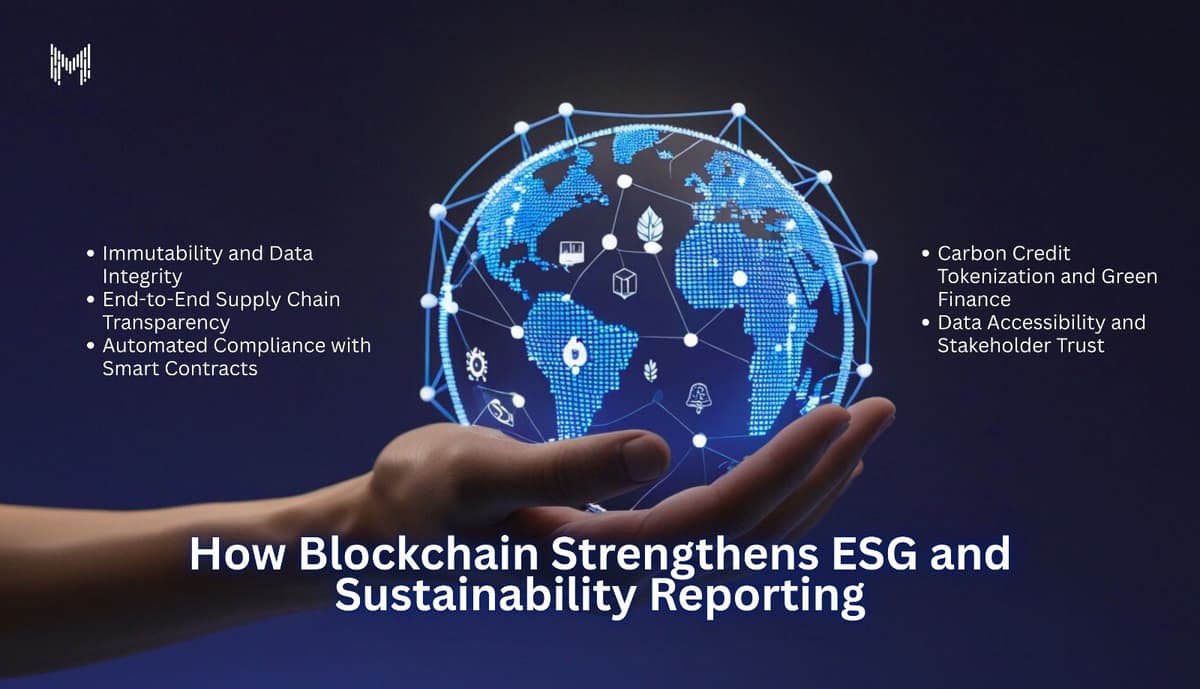
How Blockchain Strengthens ESG and Sustainability Reporting
Blockchain isn’t just a technology for cryptocurrencies; it’s a transformative framework for digital trust. Its ability to record transactions transparently and immutably makes it a perfect match for sustainability management and ESG auditing.
Let’s break down how blockchain creates measurable impact across the ESG ecosystem:
- 1. Immutability and Data Integrity
One of the biggest challenges in ESG reporting is data manipulation. Companies often exaggerate sustainability claims (known as greenwashing) to appeal to investors and consumers. Blockchain eliminates this risk by creating immutable records.
Every piece of data is timestamped and permanently stored across a distributed ledger. This ensures that ESG metrics cannot be altered or falsified, giving investors and regulators full confidence in the authenticity of sustainability reports.
Example: A company tracking its carbon emissions can store IoT sensor data directly on a blockchain. Once entered, no one can edit the figures, making the report verifiable in real time. - 2. End-to-End Supply Chain Transparency
Most ESG goals rely on the ethical behavior of suppliers and partners. However, global supply chains are complex, often spanning multiple countries with different regulations and oversight.
Blockchain provides a transparent view of every transaction or movement across the supply chain from raw material sourcing to product delivery.
This level of traceability helps companies:- Verify ethical sourcing (e.g., no child labor, conflict-free minerals).
- Ensure environmental standards are met across the supply chain.
- Prove sustainability claims to stakeholders with verifiable data.
Real-world use case: Luxury fashion brands and food producers are using blockchain to confirm that materials come from sustainable, verified sources boosting both consumer confidence and brand reputation. - 3. Automated Compliance with Smart Contracts
Regulatory compliance is one of the most resource-intensive aspects of ESG reporting. Blockchain simplifies this with smart contracts self-executing digital agreements that automatically enforce rules and record transactions.
These contracts can trigger actions when sustainability milestones are reached, such as:- Automatically recording data for carbon reduction goals.
- Releasing green bonds only when verified ESG metrics are achieved.
- Sending real-time reports to regulators and auditors.
This automation not only reduces human error but also ensures consistent, accurate, and real-time compliance with frameworks like:- Global Reporting Initiative (GRI)
- Task Force on Climate-related Financial Disclosures (TCFD)
- Sustainability Accounting Standards Board (SASB)
- 4. Carbon Credit Tokenization and Green Finance
The global carbon market is booming, yet it suffers from issues like double-counting and lack of standardization. Blockchain solves this by allowing tokenization of carbon credits, where each credit is represented as a unique, traceable digital asset.
These digital tokens can be traded transparently, ensuring that credits are legitimate and not duplicated. This innovation enhances trust in carbon trading, green bonds, and impact investing opening new opportunities for sustainable finance.
Fun fact: The World Bank and several major energy companies have already piloted blockchain-based carbon trading platforms to ensure greater transparency and accountability. - 5. Data Accessibility and Stakeholder Trust
Blockchain allows multiple stakeholders—investors, auditors, NGOs, and customers—to access the same verified ESG data through permissioned blockchains.
This democratization of information builds trust and accountability, enabling transparent collaboration between all parties involved in sustainability.
In essence: Blockchain turns ESG data from a static report into a living, interactive ecosystem of real-time sustainability intelligence.
The Business Value of Blockchain-Driven ESG Reporting
Beyond compliance, companies embracing blockchain for ESG gain competitive advantages that directly impact profitability and brand value:
- Investor Confidence: Transparent ESG data attracts responsible investors seeking trustworthy sustainability performance.
- Operational Efficiency: Automated data collection and smart contracts reduce reporting time and costs.
- Reputation Boost: Transparency and ethical practices build customer loyalty and trust.
- Innovation Edge: Early adoption positions companies as leaders in digital sustainability transformation.
In short, blockchain is not just an ESG enabler it’s a strategic investment in long-term growth and global relevance.
Global Examples of Blockchain in ESG Reporting
IBM’s Responsible Sourcing Blockchain Network:
Used by global manufacturers to track minerals from ethical mines to final products.
- Provenance (UK): A blockchain platform that allows brands to verify product origins and environmental claims.
- Energy Web Foundation: Leveraging blockchain to build transparent renewable energy markets.
- VeChain: Enables real-time sustainability tracking for supply chains across industries such as logistics, retail, and manufacturing.
Each of these demonstrates how blockchain can strengthen ESG frameworks, reduce fraud, and enhance traceability across diverse industries.
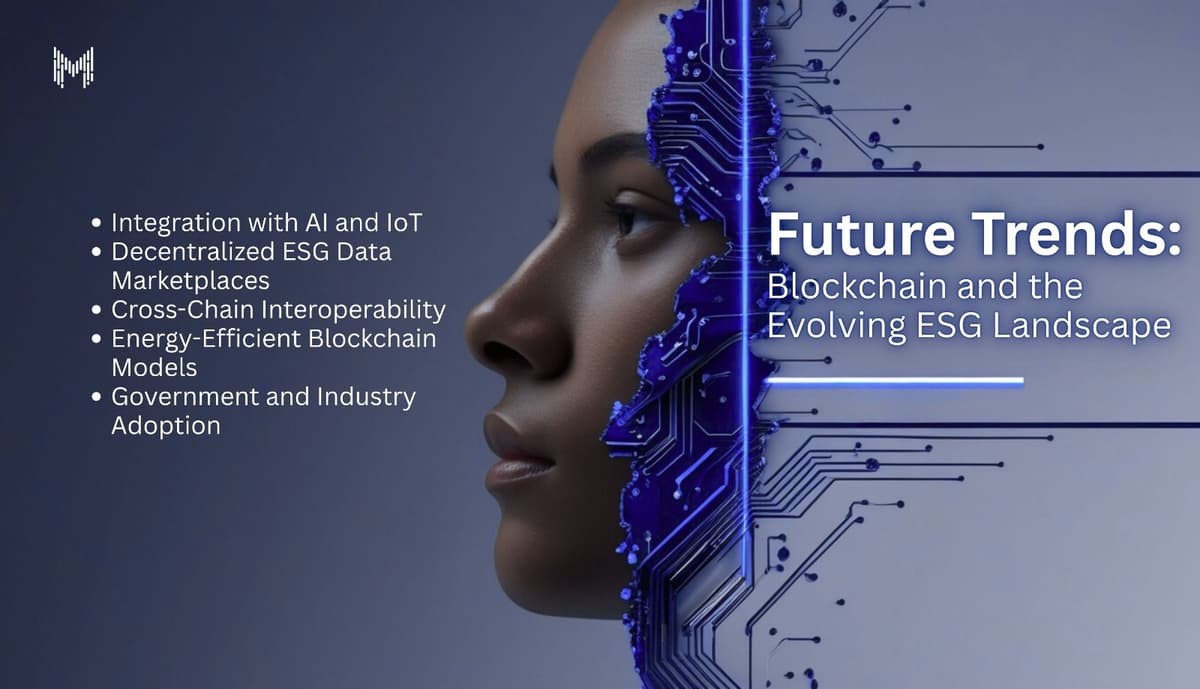
Future Trends: Blockchain and the Evolving ESG Landscape
As global governments enforce stricter sustainability regulations, blockchain will evolve from a “nice-to-have” tool into a critical infrastructure for ESG governance.
Emerging trends include:
- Integration with AI and IoT for smarter, real-time ESG analytics.
- Development of decentralized ESG data marketplaces for global collaboration.
- Cross-chain interoperability for standardized global ESG data exchange.
- Expansion of green blockchain networks using energy-efficient consensus models like Proof of Stake (PoS).
The future of ESG reporting will be defined by data integrity, interoperability, and transparency—all of which blockchain provides at scale.
About Mkaits Technologies
At Mkaits Technologies, we help organizations embrace the future of digital trust and sustainability. Our expertise lies in integrating blockchain technology with ESG and sustainability reporting systems to create transparent, compliant, and verifiable frameworks that drive long-term impact.
Whether you’re a startup looking to attract ESG investors or an enterprise seeking to enhance compliance, we offer tailored blockchain solutions that align with your sustainability goals.
With offices in Perth, Australia, and Islamabad, Pakistan, Mkaits Technologies empowers global businesses to transition from traditional reporting to blockchain-powered sustainability intelligence.
The future of ESG reporting will be defined by data integrity, interoperability, and transparency—all of which blockchain provides at scale.
For organizations ready to lead the change, the time to act is now.
Mkaits Technologies — Empowering transparency through blockchain innovation.
Head Offices: Perth, Australia | Islamabad, Pakistan
Visit us today to explore how blockchain can transform your ESG and sustainability reporting.
Blockchain is not merely a technological advancement it’s the foundation of future-ready sustainability. By embedding trust, transparency, and traceability into ESG reporting, blockchain enables businesses to build a credible, data-driven sustainability narrative that investors and customers can truly believe in.