💡What You'll Learn
- Why most AI features fail to deliver real value
- How hype-driven AI hurts user experience
- What separates real AI value from “AI decoration”
- How to identify where AI actually belongs in your product
- How to build AI that removes friction instead of adding it
Let’s say the quiet part out loud.
Most AI features today aren’t solving real problems.
They’re just… there.
Added to pitch decks.
Highlighted on landing pages.
Used as a shortcut to sound “innovative.”
But users?
They see right through it.
The Moment It Clicked for Me
I was testing a product recently.
Clean UI. Smooth onboarding. Solid idea.
Then I hit the “AI-powered insights” button.
I expected something smart. Helpful. Maybe even impressive.
Instead?
Generic suggestions.
Surface-level analysis.
Nothing I couldn’t have figured out myself in 10 seconds.
And that’s when it hit me:
This feature wasn’t built for users.
It was built to impress investors.
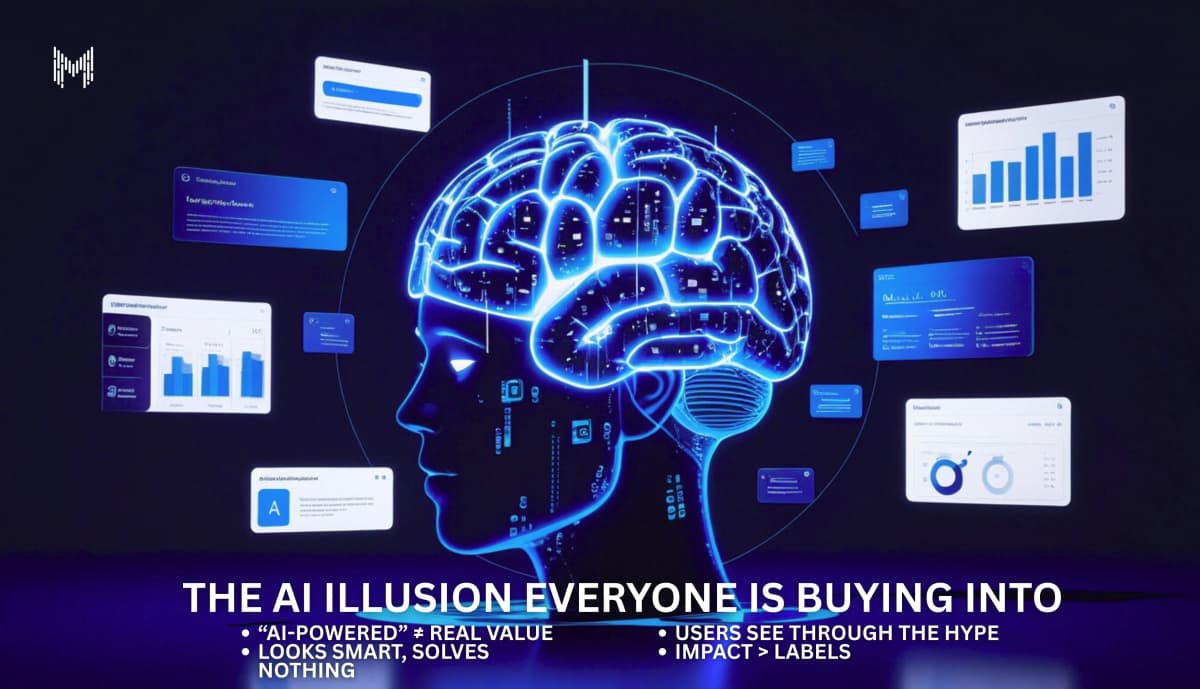
The AI Illusion Everyone Is Buying Into
Right now, “AI-powered” is the most overused phrase in tech.
Products are shipping features like:
- AI chatbots no one asked for
- AI recommendations that feel random
- AI summaries that add zero value
- AI dashboards that look smart but say nothing
It creates the illusion of innovation.
But here’s the problem:
Users don’t care that it’s AI
They care if it actually helps them
And most of the time…
It doesn’t.
Why Most AI Features Fail
1. They’re Built Backwards
Instead of asking:
“What problem are we solving?”
Teams ask:
“Where can we add AI?”
That’s how you end up with features that feel forced.
2. They Optimize for Hype, Not Usefulness
AI looks good in:
- Pitch decks
- Product launches
- Investor updates
But real users don’t interact with hype.
They interact with outcomes.
3. They Ignore Context
AI without context is just noise.
If your system doesn’t understand:
- User behavior
- Intent
- Timing
Then it’s not intelligence.
It’s decoration.
4. They Add Friction Instead of Removing It
Ironically, many AI features:
- Slow users down
- Confuse decision-making
- Create extra steps
And that’s the opposite of what good product design should do.
What Users Actually Want (But No One Talks About)
Let’s simplify it.
Users don’t wake up thinking:
❌ “I hope this app uses AI today”
They think:
✅ “I hope this is fast”
✅ “I hope this saves me time”
✅ “I hope this just works”
That’s it.
AI is only valuable when it:
- Reduces effort
- Speeds up decisions
- Removes complexity
Anything else is just noise.
The Difference Between Real AI and “AI Features”
Here’s the shift most teams miss:
❌ Fake AI Value:
- “Here are some insights”
- “Here’s a smart suggestion”
- “Here’s a prediction”
✅ Real AI Value:
- “We already did this for you”
- “You don’t need to think about this anymore”
- “This problem is handled”
Real AI is invisible.
You don’t notice it.
You just feel that things are easier.
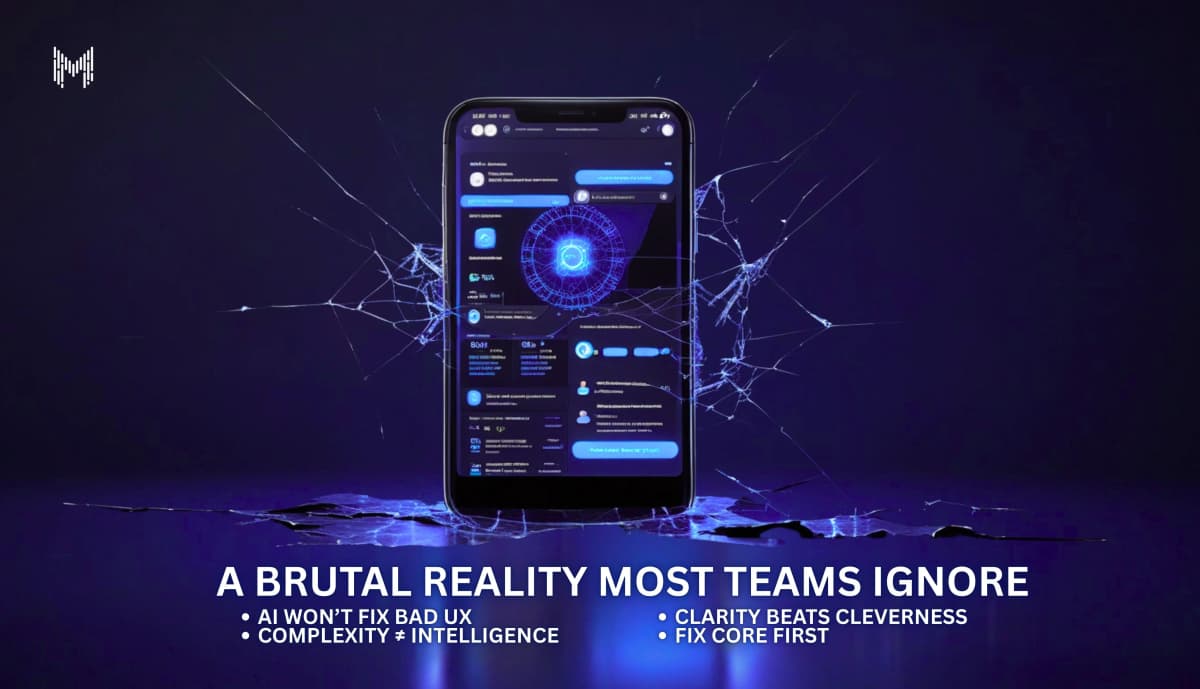
A Brutal Reality Most Teams Ignore
Adding AI won’t fix a bad product.
If your core experience is:
- Confusing
- Slow
- Unclear
AI will just make those problems… smarter.
What Building AI The Right Way Looks Like
If you actually want your AI features to matter, shift your thinking:
1. Start With Friction
Find where users struggle:
- Repetitive tasks
- Decision fatigue
- Manual processes
That’s where AI belongs.
2. Focus on Outcomes, Not Features
Don’t say:
“We built an AI tool”
Say:
“Users can now do this in 1 click instead of 10”
3. Make It Invisible
The best AI:
- Doesn’t need explanation
- Doesn’t need a button
- Doesn’t interrupt flow
It just works.
4. Test Value, Not Technology
Ask:
- Did this save time?
- Did this remove effort?
- Would users miss it if it disappeared?
If the answer is no…
It’s not valuable.
The Opportunity Most Companies Are Missing
Here’s the interesting part:
Because most AI features are useless…
👉 The bar is actually very low
If you build AI that:
- Solves one real problem
- Works reliably
- Feels natural
You instantly stand out.
Why This Matters More Than Ever
We’re entering a phase where:
- Everyone has access to AI
- Everyone can integrate it
- Everyone is claiming it
So differentiation won’t come from:
❌ “We use AI”
It will come from:
✅ “We use AI better”
Where Most Products Will Lose
Over the next few years, most products won’t fail because they lack AI.
They’ll fail because:
- Their AI adds noise
- Their experience gets worse
- Their users feel overwhelmed
And users don’t stick around for that.
Where Smart Products Will Win
The winners will:
- Use AI to remove steps, not add them
- Solve real problems, not imaginary ones
- Build for users, not headlines
Because at the end of the day:
Users don’t remember features.
They remember how easy you made their life.
Why Choose Mkaits Technologies
At Mkaits Technologies, we don’t build AI for the sake of it.
We focus on:
- Real user problems
- Practical AI integration
- Seamless user experiences
Because we believe:
👉 Technology should simplify not complicate
👉 AI should assist not distract
👉 Products should work not just impress
Whether it’s AI, Web3, or custom software, our approach is always the same:
Build what users actually need. Not what sounds good.